The Daily Camera did a Side Bar article on Provident Living:
The screaming headline reminded me of a story a Detroit Paper did on our family when I was fifteen.
“Louisville family prepared to face the end times”
My parents were interviewed in 1985 in a crawl space where we stored our years supply of food. The reporter noted that our family was sitting in our “bomb shelter” during the interview, and the photographer took some pictures of me with my siblings which showed up along with the article. I was Jenny Tripp, aged 15, back then, and if I remember correctly I think they quoted me in the story.
Anyway, this was a flash back to a time when the arms race had everyone a little nervous about nuclear bombs, particularly my dad who followed current events closely. I don’t know how the paper found our family, but they found us a fascinating bunch of “End of the world” nuts to report about.
I was really pleased however that Lisa Marshall mentioned the economics of Provident Living as well as the fact that this is simply a smart way to life if you have children. Recent natural disasters have definitely upped everyones awareness of the need for 72 hour kits, and with the economy a little wobbly, it doesn’t hurt to have some food tucked away in case of lose of a job.
I liked the secondary headline, it said:
“The Mormon practice of provident living also aids in disasters”
For me the bottom line of Food Storage is simply obedience to our living prophets. They have couseled and commanded us to have this years supply, and so we have it. But as we have lived the Provident Life (And in saying that I don’t want it interpreted that we live this life perfectly. We still have a ways to go in certain areas of living providently), I have found numerous reasons why this lifestyle is a profound experience for those who live it. Perhaps the greatest blessing of all is simply increased health from eating such healthy foods.
Here is the text of the article: (My comments are in bold) – and the article was at the bottom of the cover page with a nice picture of three of my children.
By Lisa Marshall, Camera Staff Writer
November 20, 2005
LOUISVILLE — Take a peek in the cupboards of Jenny Hatch’s remarkably well-stocked two-bedroom condo and you may, for a moment, wonder what decade it is.
The kitchen shelves bulge with tall bins of whole grains, which she hand-grinds into flour almost daily for baking, as well as jars of whole beans she simmers for days before serving or storing. In the basement, shelves are piled high with bags of coal — to fire a Dutch oven in case of a power outage — and 55-gallon drums full of water. Beneath her daughters’ two twin beds are stacks of boxes containing cans of dehydrated fruits, powdered milk and legumes.
In all, there is enough food, water and fuel here to sustain her family of seven for an entire year in case of a catastrophic event. And she has no doubt that day will come.
“I believe in the prophecies and I have a testimony that we are living in the end times,” says Hatch, 36, a life-long member of the Church of Latter-day Saints. “We will see the day that we live on what we produce. We are not going to have the luxury of going to the store. It is just smart to be prepared.”
The notion of self-sufficiency, or what Mormons call “provident living,” has been an integral part of the Church of Latter-day Saints doctrine since its beginning, when scripture stressed: “If ye are prepared ye shall not fear.”
In 1937, in the midst of the Great Depression, Mormon leaders upped the importance of self-sufficiency, declaring that every household should store enough food, clothing and fuel to last at least one year. In 1970, some began to warn of what might come for those who didn’t follow the advice.
“The Lord has warned us of famines, but the righteous will have listened to prophets and stored at least a year’s supply of survival food,” said Mormon Prophet Ezra Taft Benson, in an oft-quoted 1973 writing.
In recent years, the church has begun distributing booklets and index cards that outline exactly how to start a home food supply, and what it contains. Across the United States and Canada, it now hosts dozens of food storehouses, milk-processing plants and canneries — including one in Aurora — where church members and their friends can come to stock up on nonperishable foods with long shelf-lives.
Stan Gordon, bishop of the Louisville Ward of the Church of Latter-day Saints, says church members abide by the recommendation in varying degrees. To some who move a lot it’s not practical. For others, it’s not economically possible.
“We teach it and we preach it, but there is no way to twist people’s arms about it,” Gordon says.
He and his wife Brenda take care to always have enough food and supplies to sustain their family of seven for a year. Aside from scriptural prophecy, there are many practical reasons to do so, they say. The Gordons point out that when Hurricane Katrina struck the Gulf Coast, members of the Church of Latter-day Saints were some of the first to arrive in the region with truckloads of supplies, long before federal agencies did.
Even in the event of a personal crisis, they say, an ample supply of stored food can make the difference between making it independently, or having to rely on government welfare.
“It doesn’t have to be a huge disaster,” says Jenny Hatch. “You can just be laid off from your job.”
Hatch said it took her about 10 years to accumulate a one-year-supply for she, her husband Paul, and their five children ages 3 to 17. She values it at about $4,000, plus about $2,000 for equipment like a wheat grinder, a wheat-grass juicer and a hand-crank oatmeal maker, that would allow her to keep cooking and baking even if there were no electricity.
Doomsday scenario aside, she already uses it all anyway, rotating stored food into her kitchen and visiting the Aurora cannery quarterly to replenish the supply.
“You can make a batch of muffins for a dollar, and a loaf of bread for 25 cents,” she says. “The economics of this lifestyle are really family-friendly and budget-friendly.”
And if the worst does happen?
“As a mother, I never want to look at one of my kids and say, ‘I don’t have anything to feed you’,” she says. “Even if there is nothing at the stores and commerce is shut down for whatever reason, I can feed my family and know that no one else has to do it for me.”
Beginning in January, Jenny Hatch will host a series of free, public workshops on Provident Living for Mormons and non-Mormons alike. Topics will include how to cook and bake inexpensively with natural whole foods, and how to create a 72-hour emergency preparedness kit. For more information, e-mail Hatch at jenny@naturalfamilyco.com.
Category Current Events

My local paper did a story on…..The Mormons!
On the front page of The Boulder Daily Camera a story appeared today focusing on my faith. (You need to register for access to the whole article)
I belong to The Church of Jesus Christ of Latter Day Saints, and the article did a wonderful job of outlining the basics of our faith, and gave a great forum for a couple of us to defend our faith.
The Camera Editor used several quotes from a two hour interview I did a couple weeks ago with Lisa Marshall.
Here are some examples from the article: (My quotes are in bold type)
“Only those who meet certain requirements — such as providing proof they have given their 10 percent tithing and vowing that they abstain from drugs and alcohol — can gain access to the temples where weddings, or “sealings,” take place. Non-Mormons cannot enter the temple at all, meaning in-laws, and non-Mormon friends and family often are excluded from the temple ceremony when loved ones get married. When Gordon’s own son recently got married to a convert whose parents are not Mormon, they had to wait outside.
“Anybody can go in as long as they qualify,” Gordon stresses. “It’s basically just about living a good, clean life.”
Even among Mormons, only about 50 percent have temple access.
Jenny Hatch is among them.
“This is one of the most prized possessions I have,” says Hatch, 35, pulling her laminated temple-access card from her purse. “Before they let you in, they want to know that you are convicted in your heart.”
At the modest two-bedroom condominium in Louisville where Jenny and her husband Paul live with their five children, ages 3 to 17, each day begins and ends with the children taking turns reading from thick, leather-bound scripture. Monday nights are reserved for Family Home Evening, where the kids gather around the kitchen table for faith-based games, lessons and songs. Saturdays are spent baking food for the coming week from scratch — in keeping with the Mormon doctrine of self-sufficiency — and Sundays, from 10 a.m. to noon, are spent in church where members (not paid ministers) are expected to take turns delivering the sermon.
Once a month, Jenny and Paul travel to the Mormon temple in Denver, where they perform “proxy-work” — standing in as man and wife — for church members’ dead ancestors who were never properly “sealed,” or married in the temple. Without that, according to church doctrine, they may not be reunited in heaven. The same is done for dead family members of LDS faithful who were never baptized.
“It is the great equalizer for families who came on this earth when the gospel was not there yet,” Hatch says. “It is very sweet work.””
“Higher powers
Local Mormons stress that, despite many assumptions to the contrary, they are indeed Christians. But many of their beliefs stand apart from even the most conservative denominations.
The faith dates back to 1820, when Joseph Smith, then 14, was in his upstate New York home praying when, according to the founding story, he was visited by the Heavenly Father and Jesus Christ. They told him not to choose any faith, but rather, to discover his own. Three years later, according to Mormon scripture, an angel named Moroni returned to Smith and told him of an ancient record written on gold plates and buried in a nearby hill. Those plates, which told of an ancient race of Israelites who had made their way to North America, were ultimately translated into what we know now as the Book of Mormon.
As with any religion, its beliefs are vast and complex. But at its core, the church believes itself to be the “restored,” living church of Jesus Christ. Smith is believed to have been just the first of many prophets who, to this day, direct the church through divine revelations.
“We believe there is a living prophet today — not only does the prophet receive revelation, but each of us do,” says Gordon.
And in the afterlife, some humans actually will become Gods.
“We believe that we can become like our Heavenly Mother and Heavenly Father — that we can become Gods,” Hatch says. “That is seen as presumptuous in some people’s minds.””
“When asked about polygamy, many local Mormons vigorously defend the practice in the past as a fact of life across religions throughout Biblical times. “It is not a new concept we invented,” Bishop Stan Gordon says.
It served its purpose at the time, they say, providing shelter and support for women and children, and driving up the Mormon population at a time when it was threatened. But it has been condemned by the church since 1890, they stress, and those practicing it today will be excommunicated.
Nonetheless, some say that if divine prophecy called on Mormons to take up the practice again — perhaps if there were a war and there were few men left at home — they would not reject the notion outright.
“I personally believe polygamy is about taking care of women and children,” Jenny Hatch says. “It is more about providing for families than anything else.””
I think Lisa did an excellent job on the article, and although she balanced it with “Anti-Mormon views”, which does tend to annoy those of us who are faithful LDS, I understand why she felt the need to balance her article, and was not offended by those views being in the paper.
Jenny Hatch
Healthy Families Make A Healthy World!


Drug Therapy for Emotional Illness – Scams, scams, and more scams
 Chat at Free Republic on this topic
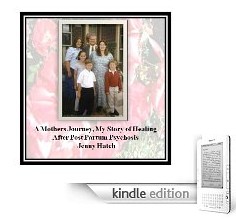
Many of my readers know that I experienced A Post Partum Psychosis after the birth of my first child in 1989. I detailed the story and my recovery in my first book, A Mother’s Journey, My Story of Healing After Post Partum Psychosis an E-Book available on my web site.
What may not be readily apparent about my story is the fact that I was court ordered to take toxic drugs for fourteen months. I fought this care for 28 days while locked up in a mental hospital. I had been breastfeeding my daughter and wanted to continue nursing her. I made this very clear to all of my family, the doctors, and the legal people. But it didn’t matter. The judge court ordered me to take those drugs, and I was forced to wean my precious baby.
In the past sixteen years I am sad to report that because of high profile cases of mothers killing their own babies while suffering from mental illness, things have gotten even worse in terms of the control the psychiatric profession has over this decision of wether or not to medicate.
It is a difficult situation, and I feel fortunate that I was able to overcome the traumas experienced and move on when so many are caught in the net of control that is embodied by the influence pharmaceutical companies have over individual rights of self determination.
I believed then, and I still believe that 90% of the reason I went psychotic was simply from sleep deprivation. Did you know that not one study has been done on the linkage between sleep deprivation and mental illness in new parents???
During these past sixteen years I have searched and studied and prayed and looked for answers. I have always wanted to have a large family, and I knew that I needed to get to the bottom of this debate in order to do so. The crux of the matter is; new mothers are being cut and drugged during childbirth, they are completely depleted in the post partum, sleep deprived, and overwhelmed. This mix throws everything off in terms of being able to overcome nutritional and sleep deficiencies.
And when mothers crash and burn – everyone runs to Big Pharma to “fix” these deficiencies. Yet, a chemical will never restore a nutritional deficiency. It will never fix sleep deprivation. It will never enable a mother to work through the traumas of a botched medical birth. And quite often the very drugs that are touted as being best to use for depression and anxiety throw the patient into a psychotic and/or diabetic state.
These are the facts. The drug companies know it. They have spent untold millions preparing anti-psychosis drugs for the many people who will crash and burn after taking anti-depressants. It is the biggest scam of our society. And fortunately we have some truth seekers who have been exposing this scam for what it is.
Here is a recent article on the disconnect between drug advertising and the facts of how effective these drugs are…
go here
Quote:
“In the United States, selective serotonin reuptake inhibitor (SSRI) antidepressants are advertised directly to consumers [1]. These highly successful direct-to-consumer advertising (DTCA) campaigns have largely revolved around the claim that SSRIs correct a chemical imbalance caused by a lack of serotonin (see Tables 1 and 2).
For instance, sertraline (Zoloft) was the sixth best-selling medication in the US in 2004, with over $3 billion in sales [2] likely due, at least in part, to the widely disseminated advertising campaign starring Zoloft’s miserably depressed ovoid creature. Research has demonstrated that class-wide SSRI advertising has expanded the size of the antidepressant market [3], and SSRIs are now among the best-selling drugs in medical practice.”
additional quote:
“In short, there exists no rigorous corroboration of the serotonin theory, and a significant body of contradictory evidence. Far from being a radical line of thought, doubts about the serotonin hypothesis are well acknowledged by many researchers, including frank statements from prominent psychiatrists, some of whom are even enthusiastic proponents of SSRI medications (see Table 1).
However, in addition to what these authors say about serotonin, it is also important to look at what is not said in the scientific literature. To our knowledge, there is not a single peer-reviewed article that can be accurately cited to directly support claims of serotonin deficiency in any mental disorder, while there are many articles that present counterevidence.
Furthermore, the Diagnostic and Statistical Manual of Mental Disorders (DSM), which is published by the American Psychiatric Association and contains the definitions of all psychiatric diagnoses, does not list serotonin as a cause of any mental disorder. The American Psychiatric Press Textbook of Clinical Psychiatry addresses serotonin deficiency as an unconfirmed hypothesis, stating, “Additional experience has not confirmed the monoamine depletion hypothesis”
So what is going on here???
Quote:
“The FDA has sent ten warning letters to antidepressant manufacturers since 1997 [34–43], but has never cited a pharmaceutical company for the issues covered here. The reasons for their inaction are unclear but seem to result from a deliberate decision at some level of the FDA, rather than an oversight. Since 2002, the first author (JRL) has repeatedly contacted the FDA regarding these issues.”
Conclusion
“The impact of the widespread promotion of the serotonin hypothesis should not be underestimated. Antidepressant advertisements are ubiquitous in American media, and there is emerging evidence that these advertisements have the potential to confound the doctor–patient relationship. A recent study by Kravitz et al. found that pseudopatients (actors who were trained to behave as patients) presenting with symptoms of adjustment disorder (a condition for which antidepressants are not usually prescribed) were frequently prescribed paroxetine (Paxil) by their physicians if they inquired specifically about Paxil [45]; such enquiries from actual patients could be prompted by DTCA [45].
What remains unmeasured, though, is how many patients seek help from their doctor because antidepressant advertisements have convinced them that they are suffering from a serotonin deficiency. These advertisements present a seductive concept, and the fact that patients are now presenting with a self-described “chemical imbalance” [46] shows that the DTCA is having its intended effect: the medical marketplace is being shaped in a way that is advantageous to the pharmaceutical companies.
Recently, it has been alleged that the FDA is more responsive to the concerns of the pharmaceutical industry than to their mission of protecting US consumers, and that enforcement efforts are being relaxed [47]. Patients who are convinced they are suffering from a neurotransmitter defect are likely to request a prescription for antidepressants, and may be skeptical of physicians who suggest other interventions, such as cognitive-behavioral therapy [48], evidence-based or not. Like other vulnerable populations, anxious and depressed patients “are probably more susceptible to the controlling influence of advertisements” [49].
In 1998, at the dawn of consumer advertising of SSRIs, Professor Emeritus of Neuroscience Elliot Valenstein summarized the scientific data by concluding, “What physicians and the public are reading about mental illness is by no means a neutral reflection of all the information that is available” [50]. The current state of affairs has only confirmed the veracity of this conclusion. The incongruence between the scientific literature and the claims made in FDA-regulated SSRI advertisements is remarkable, and possibly unparalleled.”
An activist group called mind freedom attempted to engage Pfizer in a debate on the efficacy of Anti-Depressants and the serotonin connection. For an interesting insight – go here
The truly sick side to this whole scam is the families who are demolished because of toxic side effects. Compelling evidence exists that prove anti-depressants cause REM sleep disorder, a disociative state in which the patient acts out nightmares while in a sleep state.
Quotes from Ann Blake Tracy:
“As I say in nearly every lecture I give, “What could be more terrible than to chemically induce first of all someone’s most horrifying nightmare and then sleepwalk? In this way the individual acts out the one thing that is the most terrifying thing to them.”
This is clearly why we have cases of such loving and caring mothers, like Andrea Yates, killing their children – that was her worst nightmare. And no one loved Phil Hartman more than his wife Brynn who even went to a friend’s home after shooting him to the friend to come home with her to tell her if she had shot Phil or if she was having a nightmare because she could not tell which was real.
In my opinion the fact that SSRIs are producing the majority of RBD is possibly the most significant piece of research we have ever seen on SSRI antidepressants.”
Quote:
“But Wyeth’s Effexor has been in the news so much this year you would think someone might have noticed some red flags popping up.
To list only a few:
First we had Andrea Yates go to trial for killing her five children while under the influence of both Effexor and Remeron at maximum dose of each drug.
Then this past spring a woman, who worked for Wyeth, died in a terrible murder/suicide. Her job was to take calls on adverse reactions to Effexor. Her husband, Michael Burgess, while on Effexor, chased her, her daughter and her parents through the house and grounds of the home they shared killing them all before killing himself.
Now, if your job consists of listening to these reactions at work all day long and recording them for the drug maker, and you STILL don’t see the warning signs clearly enough to save your own life and the lives of your family, why would we expect anyone else to notice?
Dr. Ann Blake Tracy, Executive Director,
International Coalition For Drug Awareness
http://www.drugawareness.org and author of Prozac: Panacea
or Pandora? – Our Serotonin Nightmare (800-280-0730)”
I am absolutely disgusted by the control the drug manufacturers have over our lives, the courts, the public mind, and the individuals who have been caught in their money making schemes.
I have been contacted in the past year by two women who have each experienced a post partum psychosis. Both of these women were informed by their doctors that should they decide to give birth to a second child, they will be forced to eat Anti-Psychotic drugs for two years.
It is time to start exposing the lies, distortions, and restoring to the people their rights of self-determination. For starters we should spend some quality time on teaching new moms how to PREVENT emotional illness in themselves. This is the whole purpose of my web site. To teach mothers how to give birth gently at home, nurture themselves with whole foods, make sure they get plenty of sleep, and stay away from drugs and chemicals.
The most powerful anti-depressant on the market is Flax Seed Oil. Taking a tablespoon of this oil every day the final trimester of pregnancy is one of the most powerful things a mother can do to help herself prevent emotional illness. The flax aids the body in the manufacture of B-Vitamins. Everyone who is mentally ill has a B-vitamin deficiency. No drug will ever give the body what it needs in terms of nutrients, and there is plenty of evidence that these drug therapies deplete the body of vitamins, minerals, and proteins as they are metabolized.
It is time for our society to throw off the chains that bind us and move forward towards health and wellness instead of drugging every symptom into mind numbing oblivion.
Jenny Hatch
Chat at Free Republic on this topic
Healthy Families Make A Healthy World!

My Children’s Education – Charter Schools
Yesterday I wrote a response to a review of a new book about charter schools and it was published on the Wall Street Journal Web Site…
Go Here
Here is a link to the original review.
And a link to the book Our School
Our School : The Inspiring Story of Two Teachers, One Big Idea, and the School That Beat the Odds
by Joanne Jacobs
Amazon reviews:
From Publishers Weekly
Jacobs had been an education-beat journalist for more than 15 years before she decided to quit and find out what was really going on with the charter school movement.
In 2001, she started volunteering at Downtown College Prep (DCP), a first-year charter school with 100 ninth graders from predominantly poor, Mexican-American families in San Jose, Calif. The cofounders of the school had a clear mission: to take failing students and prepare them to attend college and do well.
Students would have to break with gang culture and adopt DCP’s mantra: ganas (motivation), orgullo (pride) and communidad (community). Unlike the formulaic, for-profit charter schools of businessmen like Chris Whittle (see the review of Crash Course in PW, Aug. 29), DCP is enthusiastically experimental.
When something’s not working (e.g., trying to teach algebra when kids don’t know fractions), they try something else. As Jacobs tells the story of DCP’s amazingly committed teachers and their (mostly) courageous students, even hardcore opponents of charter schools may soften.
Some useful data (DCP’s student stats, funding summaries) and a listing of resources for people thinking of starting a charter school round out this fascinating case study. (Dec.)
Copyright © Reed Business Information, a division of Reed Elsevier Inc. All rights reserved.
Review
“Our School is wonderfully written and wonderfully informative. I cannot think of another book that provides such a close and honest look at a successful charter school serving immigrant kids in grave danger of striking out in American life. The fascinating story that Joanne Jacobs tells zips along like a good novel, but it also delivers an important and optimistic message to educators who want to rescue kids.”–Abigail Thernstrom, co-author of No Excuses and America in Black and White
“Joanne Jacobs has written a ground-breaking book about the most interesting, and potentially important, change in American schooling in the last 15 years. If the rapid growth of charter schools continues, every district in the country will soon have one, and everyone needs to know, as Jacobs explains, where they came from and why they are needed.”–Jay Mathews, Washington Post education columnist, author of Harvard Schmarvard, Escalante, and Class Struggle
“Our School is today’s Up the Down Staircase. It’s not often a book about my profession gets it right.”–Robert Wright, teacher, Morrill Middle School, San Jose, California
“The more true tales we read about successful charter schools – and the gritty determination and endless frustration of those who yearn to start them – the more American education is going to improve. We need constructive examples of real people making a real difference with real kids in schools that work, schools that didn’t even exist before. Joanne Jacobs has unearthed such an example, and she tells its story in a vivid, insightful, and inspiring way.”–Chester E. Finn, Jr., Senior Fellow, Hoover Institution, Stanford University, and President, Thomas B. Fordham Foundation
“Joanne Jacobs is an experienced journalist who is sensitive to her subjects and has a gift of storytelling. This is a profound book on a fascinating school in the 21st century.”–Richard Colvin, Director of the Hechinger Institute on Education and the Media at Columbia University
I pray every family can find the school option that works best for each child.
Jenny Hatch
Text of my comment:
My Children’s Education
Jenny Hatch – Louisville, Colo.
My children have been attending a Charter School for the past three years.
Before this we homeschooled for a couple years, tried the public school (but pulled the children out because of an overemphasis on diversity studies and an underemphasis on the basics), and we really agonized to know what was best for our five children.
I am happy to report that this K-12 charter really feels right for our family. The limitations of home school were really embodied in a lack of classroom competition which is a normal and healthy means for students to stretch themselves academically. During homeschool my children worked every day on the curriculums that we purchased for them, but they had no incentive to go above and beyond the basics I required.
An excellent Character Education curriculum is emphasized every day at the charter. I’ve determined that when the schools are focusing on teaching the students how to have good character, they don’t have to worry so much about discrimination based on differences. Excellent art, music, and sports programs round out this approach and offer our children opportunities which were impossible while we were homeschooling.
I believe Charters are a wonderful opportunity for those families who have access to them, and we feel fortunate to have one within driving distance of our home.
Healthy Families Make A Healthy World!

Women defy odds in Afghan polls
“Female candidates have triumphed in Afghanistan’s parliamentary elections, with one bidding to become the new parliament’s speaker.
After a delay in counting of more than a month, official results show women secured seats ahead of male candidates in a quarter of the 34 provinces, while in one a woman was outright winner.”
Let FREEDOM ring!
Jenny Hatch


