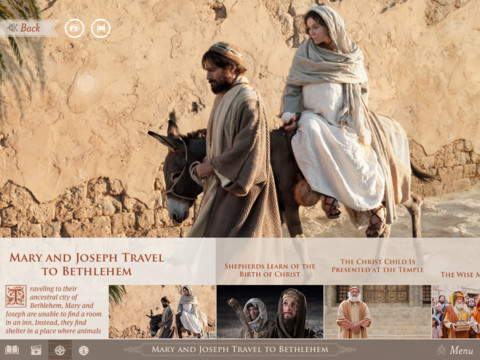
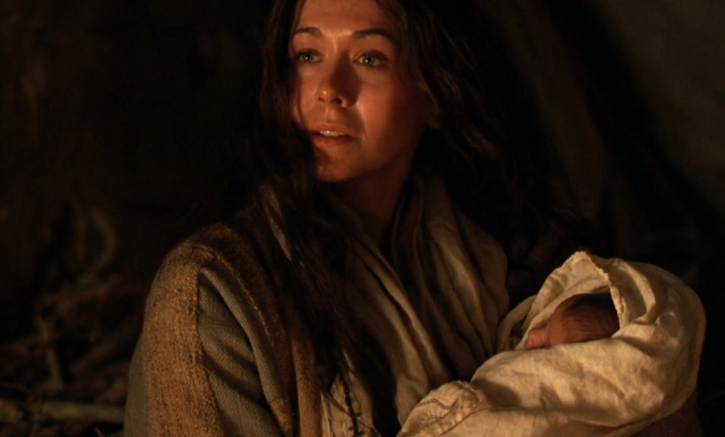
The church I belong to has produced over fifty movies based on the life of Jesus Christ and certain Bible Stories. HERE is the web site where they will all eventually be hosted.
I actually auditioned as an actor for these movies when the notice came out a few years ago. Didn’t get the job, but have been aware of it and watching for them to be produced for a long time.
A Few weeks ago I was released from my Ward Welfare Specialist Calling and then I was asked to teach the 12 and 13 year old Sunday School Class. With the start of a new year, we have a new course of study and I thought I would share these lessons. The Topic for the Youth for the year is Preparing for Exaltation.
I am also serving as Visiting Teacher and lead the singing in Sacrament Meeting. Paul and I sing with our ward choir and we love being members of The Church of Jesus Christ of Latter Day Saints!
Jenny Hatch
To read all of the text from this lesson, please click here.
A Loving Father—An Eternal Plan
Our Earth Experience Is Part of the Plan of Salvation
Story and discussion
Read the following story told by Bishop H. Burke Peterson, who was a member of the Presiding Bishopric:
“My parents and grandparents were born and raised in Utah. However, my mother and father began their married life in Phoenix, Arizona. That is where my three brothers and I were raised. Almost every summer my father and mother would take all of us to Utah … to enjoy the association with our cousins and other relatives.
“… One spring before school was out I asked my father if I could go to Salt Lake City to work and then return to Phoenix at the end of the summer to be with my family and begin school again. After thinking it over, my parents decided it would be fine. When school was out in May, Dad took me with him to the [bus station] and, since I had no money of my own as yet, bought me a ticket to Salt Lake City. I was somewhat taken back when I found out that he had purchased for me a one-way ticket instead of a round trip. He said he would take the responsibility to see that I arrived in Salt Lake City but it would be up to me to do what was necessary while I was there to purchase the ticket for a return home to Phoenix at the end of the summer. As you can imagine, I was most anxious to come back home after my work experience as I had burning in my memory the happy experiences we had always enjoyed in our home. I enjoyed the association with and loved my three brothers and was most happy and comfortable being with my parents.
“When I arrived in Salt Lake City I immediately set about to find work. This I was able to accomplish, and as soon as my first paycheck was given to me, guess what I did. First I paid my tithing, and then I took the rest of the money to the bus depot downtown in Salt Lake City and purchased a return trip ticket to Phoenix. I wanted to be sure that when summer was over there would be nothing to stand in the way of my returning home. I loved my home very much. For the rest of the summer I was particularly mindful of taking good care of myself and doing everything necessary to insure my return home to Phoenix. More than anything else I wanted to enjoy again the experience of being with my family.”
• Have you ever had an experience where you were away from your family and home and were anxious to return?
Give class members a few moments to comment, and then read Bishop Peterson’s comments on the story:
“We all had an experience similar to this long ago before we came to this earth. We were in a gathering where we were being instructed by our Father in heaven concerning the earth he had prepared for us. … He let us know that the decision to come here would be ours, and if this was our wish, he would see to it that we arrived into this mortal experience safely. Like the experience I had in Phoenix as a boy, our Father in heaven would provide a one-way ticket for us. Whether or not we returned again to him at the end of our mortal experience on earth would depend upon the things we did while we were here” (“Return Trip Ticket Home,” New Era, Apr. 1974, 5).
Explain that this year in Sunday School, class members will learn about Heavenly Father’s plan for us, Jesus Christ’s role in that plan, and what we must do to return to them when our earth life is over.
• What do these boxes and circles represent?
If class members do not immediately realize that the drawing represents the plan of salvation, label one or two of the boxes or circles. Then ask class members to fill in the rest of the chart, helping them as needed. Explain that this diagram answers three universal questions: Where did we come from? Why are we here? Where are we going after this life?
• Which box or circle represents where we are right now? (The circle labeled “mortality.”)
Point out that our earth life is only part of our eternal existence. We lived before we came to earth, and we will live after we die. Briefly review the plan of salvation as illustrated on the chart, and tell class members that they will be learning about it throughout the year.
Scripture discussion
Have class members turn to Moses 1:39. Ask one of them to read the verse aloud.
• What does God tell us his work is?
Point out that the scripture names two things as God’s work—to bring to pass immortality and eternal life. Explain that these two words do not refer to the same thing. Immortality is a state of being resurrected, of being free from physical death. This blessing will come to all people. Eternal life is living with Heavenly Father and Jesus Christ in the celestial kingdom. This blessing—which is also called exaltation—comes only to those who keep the commandments and make the necessary covenants. (You may want to point out that the title of this course of study is “Preparing for Exaltation.” The lessons that will be taught in Sunday School this year focus on how we can prepare to live with Heavenly Father and Jesus again.)
• How does it make you feel to know that Heavenly Father’s most important work is helping you return to live with him again? (Invite class members to answer this question to themselves if they do not wish to share their feelings with the class.)
Explain that Heavenly Father’s plan of salvation provides a way for us to gain a body, learn by experience, show that we will obey his commandments, and return to him stronger and wiser. Emphasize that this plan is given because of Heavenly Father’s great love for us.
Knowing the Plan Helps Us Make Wise Decisions
Activity
Give each class member or pair of class members a pen or pencil and a copy of the “Mortality Maze” (or have all class members work together on a large copy of the maze). Explain that the objective is to draw a continuous line from “Birth” to “Death,” passing through the center (“Fulfill the purpose of life”).
When class members finish the maze, explain that in life, as in this maze, we must make many decisions about which way we should go. However, when we understand that life on earth has a purpose and is part of Heavenly Father’s plan, we can begin to make correct decisions. (You may want to point out that there is a second path from “Birth” to “Death,” but this path does not go through the center. Likewise, some people finish their earth life without understanding or fulfilling its purpose.)
Stories and discussion
Read or have a class member read the following stories. Discuss with class members how being aware of God’s plan could influence the decisions of the person in each story. Help class members see how a knowledge of God’s plan can help them better understand themselves and the decisions they will have to make in life.
Paul
All his life, Paul had planned to go on a mission. From the time he was very young, his parents had taught him the importance of serving the Lord in this way. He had built a substantial savings account, which he called his “mission money.” It had never occurred to him that he might do anything else.
As Paul grew older, however, it became harder for him to save money for a mission. Any money he earned seemed to be spent before he got around to putting any in his savings account. In addition, he saw many expensive things he wanted to have. Paul began to doubt whether he wanted to spend so much money and time on a mission.
• What does God expect of Paul?
• How could understanding the plan of salvation help Paul make a correct decision about serving a mission?
• What difference will this decision make in Paul’s progress toward eternal life?
Note to the teacher
Good questions cause class members to think. Avoid asking questions that can be answered with a simple “yes” or “no.” (See Teaching—No Greater Call, 105–6.)
Melissa
Melissa had many friends in her ward until she began attending a new school. She made new friends at the school, and soon her new friends became very important to her. She saw her old friends in the ward less and less, and she began to feel that she had outgrown them. Her new friends seemed more exciting and mature and seemed to be doing adventurous things she had never done before.
One day Melissa attended a party at the home of one of her new friends. Everyone she thought was important was there. As the party progressed, the activities became much different from what Melissa was accustomed to. Even people she would never have expected such conduct from were drinking, and some were using drugs. Melissa wanted to have fun and be accepted by these people who were so important to her, but she was very uncomfortable. When one of her friends offered her an alcoholic drink, she thought maybe it wouldn’t hurt to drink just one.
• What do you think Melissa should do? Why?
• How could understanding the plan of salvation help Melissa make the right choice?
• If you were to talk to Melissa privately, what might you say to her to help her make the right decision?
Carl
Carl played basketball and played it well. But he did not do as well in schoolwork. Because of his interest in basketball, he devoted little time to studying for his classes. Carl’s parents told him that if his grades were poor, he would no longer be able to play on the basketball team. Carl didn’t know what to do. Then a possible solution appeared. Mike, a member of Carl’s basketball team, mentioned that the same thing had happened to him. He solved his problem by cheating on tests. He was able to get good grades without studying. Mike suggested that Carl do the same thing. Carl knew it was dishonest, but it seemed like such a simple solution to his problem.
• What could Carl do to solve his problem without cheating?
• How could a testimony of the plan of salvation help Carl decide what to do? Understanding the Plan of Salvation Makes a Difference
Discussion
Ask class members to think about some of the decisions they face each day.
• How can understanding and having a testimony of the plan of salvation help you with your daily decisions?
Invite class members to explain how understanding that Heavenly Father has a plan for them could help them with a decision they have faced or are facing. If appropriate, share an experience in which knowing the plan of salvation helped you make a good decision in a difficult situation.
Testimony
Testify that because Heavenly Father loves us, he has given us a plan to help us return to live with him. Knowing this plan can help us make wise decisions. Explain that the best way to make a decision is to think of the eternal consequences of each choice and choose that which will lead back to Heavenly Father.
Encourage class members to keep in mind the plan of salvation when making choices.
Enrichment Activities
You may want to use one or more of these activities during the lesson.
1. If it is available, show “Man’s Search for Happiness,” a thirteen-minute segment of the Come unto Me videocassette (53146), to explain the plan of salvation.
2. Display a road map.
• What is this? Why would someone use this?
Explain that life is like a journey. Heavenly Father knew that we would need directions to help us find our way back to him, so he provided the plan of salvation as a kind of map for us to follow.
• How can we “read” this map and know what we must do to reach our destination of living with Heavenly Father again? (Answers may include by studying the scriptures, following the prophets, and listening to our teachers and parents as they teach us about the gospel.)
• How would our lives be different if we did not have this map, or plan?
3. Invite a recently returned missionary to come to class and share an experience he or she had with teaching the plan of salvation in the mission field.
4. Sing with class members “I Am a Child of God” (Hymns,no. 301; or Children’s Songbook,2).
More Here: Heavenly Fathers Plan of Salvation
Last week I was released from my Sunday School Calling. For the past few months I have listed my lessons under this catagory – Sunday School Lessons – Gospel Principles. I was actually quite surprised that so many of you readers were interested in reading these lessons. For the past few months these entries have had huge amounts of traffic. So, although I won’t be posting any more lessons from the manual, I thought I would share a link where you can purchase the lesson manual. It costs $3.00.
I love the Gospel Principles book! It contains a very simple overview of the Gospel of Jesus Christ, and outlines the principles and ordinances necessary for salvation. I belong to The Church of Jesus Christ of Latter Day Saints, and if you would like to learn more about my faith, simply check out these web sites: Here and Here.
Here is the lesson I taught last sunday, it will be the final lesson for this calling, and then I am off to new adventures in Provident Living. Our church has a lay ministry. Nobody is paid and we all pitch in to help teach the sunday school classes, children’s classes, and do the myriad tasks associated with running a church. Last week I was called to be the preparedness person in my ward. So I will be doing that calling for the next few months, years, etc…
Here is the lesson from yesterday:
The Sabbath Day Chapter 24
31110, Gospel Principles, Unit Seven: Perfecting Our Lives, 24: The Sabbath Day, 159
The word Sabbath comes from the Hebrew word meaning day of rest. The Sabbath day commemorates God’s day of rest after he finished the Creation. We read in the book of Genesis that God created the heavens and the earth in six periods of time, which he called days: “And on the seventh day God ended his work which he had made; and he rested on the seventh day from all his work which he had made. And God blessed the seventh day, and sanctified it” (Genesis 2:2–3).
The Sabbath day is every seventh day. It is a holy day ordained by God for us to rest from our daily labors and worship him.
Discussion
• What is the Sabbath day?
The Purpose of the Sabbath Day
Jesus taught that the Sabbath day was made for our benefit (see Mark 2:27). The purpose of the Sabbath is to give us a certain day of the week on which to direct our thoughts and actions toward God. It is not a day merely to rest from work. It is a sacred day to be spent in worship and reverence. As we rest from our usual daily activities, our minds are freed to ponder spiritual matters. On this day we should renew our covenants with the Lord and feed our souls on the things of the Spirit.
Discussion
• What is the Lord’s purpose for the Sabbath day?
History of the Sabbath
The seventh day was consecrated by God as a Sabbath in the beginning of the earth (see Genesis 2:2–3). Since earliest times, the tradition of a sacred seventh day has been preserved among various peoples of the earth. God renewed a commandment concerning this day to the Israelites, saying, “Remember the sabbath day, to keep it holy” (Exodus 20:8). Keeping the Sabbath day was also a sign that the Israelites were his covenant people (see Exodus 31:12–13, Exodus 31:16; Isaiah 56:1–8; Jeremiah 17:19–27).
However, some Jewish leaders made many unnecessary rules about the Sabbath. They decided how far people could walk, what kind of knots they could tie, and so forth. When certain Jewish leaders criticized Jesus Christ for healing sick people on the Sabbath, Jesus reminded them that the Sabbath was made for the benefit of man.
The Nephites also observed the Sabbath day according to the commandments of God (see Jarom 1:5).
In modern times the Lord has repeated his commandment that we should remember the Sabbath day and keep it holy (see D&C 68:29).
Until the resurrection of Jesus Christ, he and his disciples honored the seventh day as the Sabbath. After his resurrection, Sunday was held sacred as the Lord’s day in remembrance of his resurrection on that day (see Acts 20:7; 1 Corinthians 16:2). From that time on, his followers appointed the first day as their Sabbath. In both cases there were six days of labor and one for rest and devotion.
The Lord has given us a direct commandment in these days that we, too, should honor Sunday, the Lord’s day, as our Sabbath (see D&C 59:12).
Discussion
• Why was the Sabbath changed from the seventh day to the first day?
• What special event does the first day commemorate?
How Do We Keep the Sabbath Day Holy?
The Lord asks us, first, to sanctify the Sabbath day. In a revelation given to Joseph Smith in 1831, the Lord commanded the Saints to go to the house of prayer and offer up their sacraments, rest from their labors, and pay their devotions to the Most High (see D&C 59:9–12).
Second, he asks us to rest from daily work. This means we should perform no labor that would keep us from giving our full attention to spiritual matters. The Lord told the Israelites, “Thou shalt not do any work, thou, nor thy son, nor thy daughter, thy manservant, nor thy maidservant, nor thy cattle” (Exodus 20:10). Our prophets have told us that we should not shop, hunt, fish, attend sports events, or participate in similar activities on that day.
Elder Spencer W. Kimball cautioned, however, that if we merely lounge about doing nothing on the Sabbath, we are not keeping the day holy. The Sabbath calls for constructive thoughts and acts. (See The Miracle of Forgiveness, pp. 96–97.)
What kinds of things may we do on the Sabbath? The Lord has told us to prepare only simple foods on that day, keeping the purpose of the Sabbath in mind (see D&C 59:13). The prophet Isaiah suggested that we should turn away from doing our own pleasure and should “call the sabbath a delight, the holy of the Lord, honourable” (Isaiah 58:13). We should do righteous things. We keep the Sabbath day holy by—
1. Attending Church meetings.
2. Reading the scriptures and the words of our Church leaders.
3. Visiting the sick, the aged, and our loved ones.
4. Listening to uplifting music and singing hymns.
5. Praying to our Heavenly Father with praise and thanksgiving.
6. Performing Church service that we have been assigned to do.
7. Preparing family history records and personal histories.
8. Telling faith-promoting stories and bearing our testimony to family members and sharing spiritual experiences with them.
9. Writing letters to loved ones.
10. Fasting with a purpose.
11. Sharing time with children and others in the home.
In deciding what other activities we should properly engage in on the Sabbath, we should ask ourselves: Will it uplift and inspire me?
There may be times when we are required to work on the Sabbath. We should avoid this whenever possible, but when it is absolutely necessary, we should still maintain the spirit of Sabbath worship in our hearts as much as possible.
Discussion
• Read Doctrine and Covenants D&C 59:9–13. What things can we do to draw nearer to our Heavenly Father?
Blessings for Observing the Sabbath
If we honor the Sabbath day, we may receive great spiritual and temporal blessings. The Lord has said that if we keep the Sabbath day with thanksgiving and cheerful hearts, we will be full of joy. He has promised:
“The fulness of the earth is yours, … whether for food or for raiment, or for houses, or for barns, or for orchards, or for gardens, or for vineyards;
“Yea, all things which come of the earth, in the season thereof, are made for the benefit and the use of man, both to please the eye and to gladden the heart;
“Yea, for food and for raiment, for taste and for smell, to strengthen the body and to enliven the soul” (D&C 59:16–19).
Discussion
• Read together Doctrine and Covenants D&C 59:15–19. Discuss some of the blessings that come from keeping the Sabbath day holy.
Additional Scriptures
• Exodus 31:14–17 (under Mosaic law the Sabbath was kept holy under pain of death)
31110, Gospel Principles, Unit Six: The Gospel of Jesus Christ, 23: The Sacrament, 151
Our Savior wants us to remember his great atoning sacrifice and keep his commandments. To help us do this, he has commanded us to meet often and partake of the sacrament.
The sacrament is a holy priesthood ordinance that helps remind us of the Savior’s atonement. During the sacrament, we partake of bread and water. We do this in remembrance of his flesh and his blood, which he gave as a sacrifice for us. As we partake of the sacrament, we renew sacred covenants with our Heavenly Father.
Discussion
• What is the sacrament?
• What is the purpose of the sacrament?
Christ Introduced the Sacrament
Shortly before his crucifixion, Jesus gathered his Apostles around him in an upstairs room. He knew he would soon die on the cross. This was the last time he would meet with these beloved men before his death. He wanted them to always remember him so they could be strong and faithful.
To help them remember, he introduced the sacrament. He broke bread into pieces and blessed it. Then he said, “Take, eat; this is in remembrance of my body which I give a ransom for you” (Joseph Smith Translation, Matthew 26:22). Next he took a cup of wine, blessed it, and gave it to his Apostles to drink. He said: “Drink ye all of it. For this is in remembrance of my blood … , which is shed for as many as shall believe on my name, for the remission of their sins” (Joseph Smith Translation, Matthew 26:23–24; see also Matthew 26:26–28; Mark 14:22–24; Luke 22:15–20).
After his resurrection, Jesus came to the Americas and taught the Nephites the same ordinance (see 3 Nephi 18:1–11). After the Church was restored in the latter days, Jesus once again commanded his people to partake of the sacrament in remembrance of him, saying, “It is expedient that the church meet together often to partake of bread and wine in the remembrance of the Lord Jesus” (D&C 20:75).
Discussion
• Read Matthew 26:26–28. Ask class members to think about the Lord’s Supper the next time they partake of the sacrament.
How the Sacrament Is Administered
The scriptures explain exactly how the sacrament is to be administered. Members of the Church meet each Sabbath day to worship and partake of the sacrament (see D&C 20:75). The sacrament is administered by those who hold the necessary priesthood authority. A priest or elder breaks bread into pieces, kneels, and blesses it (see D&C 20:76). A deacon or other priesthood holder then passes the sacrament bread to the congregation. Then the priest or elder blesses the water and it too is passed to the members. Jesus gave his disciples wine when he introduced the sacrament. However, in a latter-day revelation he has said that it doesn’t matter what we eat and drink during the sacrament as long as we remember him (see D&C 27:2–3). Today, Latter-day Saints drink water instead of wine.
Jesus has revealed the exact words for both sacrament prayers. We should listen carefully to these beautiful prayers and try to understand what we are promising and what is being promised to us. Here is the prayer that is offered to bless the bread:
“O God, the Eternal Father, we ask thee in the name of thy Son, Jesus Christ, to bless and sanctify this bread to the souls of all those who partake of it, that they may eat in remembrance of the body of thy Son, and witness unto thee, O God, the Eternal Father, that they are willing to take upon them the name of thy Son, and always remember him and keep his commandments which he has given them; that they may always have his Spirit to be with them. Amen” (D&C 20:77).
Here is the prayer that is offered to bless the water:
“O God, the Eternal Father, we ask thee in the name of thy Son, Jesus Christ, to bless and sanctify this wine [water] to the souls of all those who drink of it, that they may do it in remembrance of the blood of thy Son, which was shed for them; that they may witness unto thee, O God, the Eternal Father, that they do always remember him, that they may have his Spirit to be with them. Amen” (D&C 20:79).
The ordinance of the sacrament is performed very simply and reverently.
Discussion
• Read the sacrament prayers one sentence at a time. Discuss the meaning of each sentence. Challenge each class member to memorize the prayers.
The Covenants We Renew during the Sacrament
Each time we partake of the sacrament, we renew covenants with the Lord. A covenant is a sacred promise between the Lord and his children. The covenants we make are clearly stated in the sacramental prayers. It is important to know what those covenants are and what they mean.
We covenant to take upon ourselves the name of Jesus Christ. By this we show we are willing to be identified with him and his Church. We promise that we will not bring shame or reproach upon that name.
We covenant to remember Jesus Christ. All our thoughts, feelings, and actions will be influenced by him and his mission.
We promise to keep his commandments.
We take these obligations upon ourselves when we are baptized (see D&C 20:37; Mosiah 18:6–10). Thus, when we partake of the sacrament, we renew the covenants we made when we were baptized. Jesus gave us the pattern for partaking of the sacrament (see 3 Nephi 18:1–12) and said that when we follow this pattern, believing on his name, we will gain a remission of our sins (see Joseph Smith Translation, Matthew 26:24).
The Lord promises that if we keep our covenants, we will always have his Spirit to be with us. A person guided by the Spirit will have the knowledge, faith, power, and righteousness to gain eternal life.
Discussion
• Refer to D&C 20:77 again. What promises do we make during the sacrament?
Our Attitude When Taking the Sacrament
Before partaking of the sacrament, we are to prepare ourselves spiritually. The Lord emphasizes that no one should partake of the sacrament unworthily. That means we must repent of our sins before taking the sacrament. The scriptures say, “If any have trespassed, let him not partake until he makes reconciliation” (D&C 46:4). The scriptures also say, “Ye shall not suffer any one knowingly to partake of my flesh and blood unworthily, when ye shall minister it; For whoso eateth and drinketh my flesh and blood unworthily eateth and drinketh damnation to his soul” (3 Nephi 18:28–29).
During the sacrament service we should dismiss from our minds all worldly thoughts. We should feel prayerful and reverent. We should think of the atonement of our Savior and be grateful for it. We should examine our lives and look for ways to improve. We should also renew our determination to keep the commandments.
We do not need to be perfect before partaking of the sacrament, but we must have the spirit of repentance in our hearts. The attitude with which we partake of the sacrament influences our experience with it. If we partake of the sacrament with a pure heart, we receive the promised blessings of the Lord.
Discussion
• Ask someone to tell how we should prepare ourselves to partake of the sacrament.
• What can we think about during the sacrament to help us be more reverent?
Gift of the Holy Ghost Gifts of the Spirit
I have been blogging so much about other topics this week, I don’t have the time to blog my whole sunday school lessons. The links are above. I taught the Holy Ghost lesson last week, and the Gifts of the Spirit lesson will be this week – tomorow.
Enjoy! Jenny Hatch
 The church I belong to has produced over fifty movies based on the life of Jesus Christ and certain Bible Stories. HERE is the web site where they will all eventually be hosted.