
Unassisted Family Birth after Cesarean

One of the BEST Family Birth stories I have ever read!
Jenny

Charlotte’s accidental unassisted HBAC (H/T to Mama Birth)

For my first child, I went to a freestanding birth center, where my water broke first, contractions were slow to start, and I got sent home once for being in so much pain, only to be told I was just a 2. I was devastated despite knowing you could go from 2-10 really fast. I labored over 30 hours, tried every trick in the midwifery model, played the “what Would Ina May Do?” game, and decided a transfer for a mercy epidural was prudent. I had been doing deep squats, climbing stairs, walking in the Southern June heat, etc. and was delirious.

It ended in a non-emergency cesarean at hour 42 after my water broke with baby still at a -1 station the entire labor, but with me at 100% effaced and a 9. Her heart tones were great the entire labor. The midwives suspected she was honestly stuck. When she was born, sure enough–her arm and elbow had gotten into a really funky stuck position that hadn’t responded to our deep squats, spinning babies, yoga positions, etc. I got to breastfeed right away in recovery. I won’t say much else about recovery since this is a positive spin on things, but I did just want to note that while I was disappointed I didn’t have her the way it was planned, the actual birth experience was not traumatic for me, and I felt empowered at every choice to increase intervention. I do not believe I had an “unnecesarean.”

For my second baby, I knew for sure I wanted to have a HBAC since I had a non-emergency C-section and a fantastic looking scar. I did not want to be continuously monitored, put on a time clock, or be bullied into doing anything out of fear. I felt like a HBAC with competent care providers would be the safest and healthiest way to bring my baby into the world. That’s why I went with a midwife who had taken on successful HBACs and was very supportive. I will say I am a 6-minute car ride from a hospital with a Level 4 NICU.

For name references, Nancy was my CPM, and her assistant is Andrea, a CPM. Mike is my husband.

I had been crying and emotionally nutty the last 2 days, before my 39-week appointment, thinking I would be pregnant forever, and getting frustrated when I tried to fold my enormous boob into my beautiful new 38HH nursing bra and it wouldn’t quite go—I was just tired of these huge boobs and cried even harder when my left one wouldn’t fit into the cup, and I knew they’d get terrifyingly giant when my milk came in. Everything made me cry.

Lately I had a few issues with fasting morning sugars-they were high enough to be of concern, but not so high as to qualify me for a GD diagnosis. I went on metformin twice a day and followed a strict GD diet. My midwife and family practitioner would correspond and see me both once a week to coordinate care, as the FP is also Charlotte’s doctor. The FP also had a HBAC, so it was a great team who were both trying to do care to allow me to homebirth. We made a plan that we’d give me until the second due date (March 6) to just go ahead and have the baby on my own, but after March 6, we would need to figure out what to do about a possible induction. That would obviously change the homebirth plan completely, but I was very firm I would do what I needed to do about the health of the baby to make sure her transition was the best possible, as she might require extra monitoring for her sugar levels. My midwife was very glad to hear I didn’t shut out options and said we will just cross that bridge when needed.

Andrea checked the position of the baby to see how far down she was in the pelvis, and she was 3/5 of the way in using some sort of 5ths rule British midwives do. That means she was as far down in the canal as she could get before active labor began. I was so happy to hear this, because she was already further down than my first baby was when she was born! Being as how I was near my first due date (2/28) and her position, Nancy told me I could go ahead and pump colostrum to 1. save for the baby in case I needed to help regulate her sugar right away and 2. bring on contractions. She also asked me to get a hold of some donor breastmilk, about 20-30oz., to also help with potential baby sugar regulation if needed.

Sunday: I sent out an email to my playgroup and get some breastmilk to be delivered to me Monday morning! I pumped around noon and got 20ml of liquid gold. We went putzing around the neighborhood from 3:30-4, but not a brisk walk at all. We met my brother at the dog park to let the doggie cousins play, and then we went back to my house to hang out. Around 7 I decided I was going to make a delicious homemade stroganoff, so I did, and wolfed it down. I then realized I had been having fairly regular contractions about 8-10 minutes apart that were different from the BH but not even notable enough to call anyone about them. I remember laughing because how do you not know you’re having contractions after a previous labor of like 42 hours?

Another note: I had been listening to Hypnobabies CDs, attempting to learn to hypnotize myself, but I had no idea if it was “working” or not. I finally just gave up trying to figure out if I really was hypnotizing myself and just enjoyed listening to them while trying to relax or fall asleep for about 2 weeks or so. From about 10-11 I laid on the couch and listened to some tracks.

Around 11 I went to pee and saw pink on the toilet paper and got excited because it was bloody show. I figured I probably would give

birth in the next 2 days. Haha, great assumption, right? I called Nancy, who told me to take a shower and go to bed to get some rest, and my doula Julie, who said to call her whenever I needed her.

I showered and shaved my legs, something I hadn’t done since October. I also dried my hair with a round brush just passing the time. I dusted the bedroom and Mike started a load of laundry and dishes and then we went to bed.

From 1-4ish I laid in bed, listened to Hypnobabies easy first stage labor track, sipped water, peed, began to vocalize through some contractions with low moans. I don’t know what it is about the lady’s voice, but she just kept telling me that with each “pressure wave” (contraction) it was bringing me closer to meeting my baby in my beautiful birthing time (I’m telling you, they can get quite cheesy) but at that time I was all like, “Right on, this woman knows what she is talking about, so I will just listen to her tell me these things. And dammit, my uterus IS a special snowflake and knows what it is doing.”

But sometime after 4, the lady was annoying me, and so were the contractions oops! pressure waves. I decided I needed a change of location and Mike said to let him know if he needed me. I made my way to the living room and had these intense sweats and chills, so I went to lie down under my homemade buggie snuggie to watch some guilty pleasure mindless TV recorded on the DVR all geared up for future marathon sessions, and felt my water broke as soon as I was supine. So I hefted my way over to the toilet off the living room and near the kitchen and called for Mike. It is around 4:45am at this point. He comes in with the phone and laptop to start timing contractions at contraction master, and the midwife on the phone asked about baby moving around, color of the water, etc. and said she’d start heading over and she would call Andrea.

I didn’t think to call the doula yet because last labor when I felt like this and went into the birth center, I was only at 2cm. I didn’t really need help through them, and they really were just at the mildly annoying level before my water broke. She also has kids and I didn’t want her to have to leave if I didn’t feel like I truly needed her.

Mike starts putting up dishes and locating the hot water connection in order to fill up the tub the midwife will bring over with her, and I would just call out “s” for start contraction so we have a record to show her. I don’t think to call my doula because I thought I’d wait at least until 6:30 or so so she can sleep. Also, my first child was born 42 hours after my water broke last time, so Mike and I both ASSumed we had plenty of time to let people sleep. He calls my mom and dad to come get my 20 month-old so they’d be here when she woke up to hand her off, as we had decided we didn’t want her at the birth.

5:20ish I tell Mike to start up the tub because I feel like I can get in the tub to wait for them to show up by assuming I was over 5 cm. I really wanted a water birth for the first one, and thought it would be great to have one for my second. I remembered we had some delicious, giant, cold green grapes in the fridge. Mike got me grapes, water, and cold washcloth. I felt like I was going to pass out or throw up. I couldn’t stand up all the way, but felt like maybe I needed another change of location instead of the toilet, as the contractions were at least 1.5 min in length and 1 min. apart. In between, I ate those amazing grapes and sponged myself off. I also just sort of sat there and looked at my weird felted artwork I had made the previous spring. I really was just chillin’ in my own zone. During each contraction I would sort of sway on the toilet and make a low, loud aaaaooooaaahh sound.

At some point I feel like I need to poop and am happy because my body had not cleared itself out like it did last time. I quickly realize, though, that either this is the biggest turd of my life, or it is the baby descending like a train through a tunnel. I figured that out when I was all like, “uuuuuUUUGHHH!” and then the feeling kept going after I was done grunting. Mike had gone to make the bath. I reach down and feel a bulge and know I had better move or the baby will be born in the toilet “I Didn’t Know I Was Pregnant” style. I get the craziest urge to push and I do bear down and push hard while making this super animalistic noise, very much like what Chewbacca marrying a humpback whale might have sounded like at the end of the raucous wedding reception, but then realize I have got to breathe the baby out and try to chill out so I don’t rip my anus and have all my organs and the baby fall out right there in the toilet. Remember, I had never had a vaginal birth or felt anything like that before, so I was convinced I would also birth my entire pelvic floor. I then felt the ring of fire, but it was more like the sides of a cheese grater and not even fire—just scrapey and really painful! That was the ONLY painful part of labor. At this point I know I don’t have time to get in the tub. I call for Mike, who leaves the bath water running and had heard the change in my labor noises. That’s where he found me semi-standing over the toilet and saw hair–but not MY hair! I remember saying, “This isn’t poop!” and laughing hysterically. I mean, wouldn’t you after playing the “Baby v. Turd?” game in your head?

He says, “HOLY CRAP! It’s the baby’s head. What do I do?” I think he was even too shocked to cuss. I said get me a clean towel and put it on the kitchen floor, which was maybe 4 steps or 2 leaps from the bathroom. He was freaking out because I was really, really calm. I rip off my nightgown, got down on my hands and knees, thinking this would be a good position if there was some sort of shoulder dystocia issue, and my body just literally took over. At that point I really wasn’t in too much pain. I didn’t really feel anything other than a baby’s head just hanging out. It was obvious my body was in control and I was just along for the ride. I attribute being a birth story junkie to knowing what to do, since it’s not like I had previous practice. I think he called the midwife but I don’t quite remember him talking to her, and at one point he put the phone down and wasn’t quite talking to her anyhow. I remember him telling me, “Nancy says to pant!” and I said, “Too late, the baby is coming out and I will ahhhhh her down!” I told him to not pull anything out, the baby would come out on her own, and to be ready to catch.

The rest of her head came out. I asked if he could see a cord around her neck, and he said he did, so I said see if it is loose enough to remove it. It was, and said she was pink. I said wait for her shoulders to turn and she would probably come right out. I was meanwhile just sort of hanging out with a baby hanging out of me, waiting for the next contraction, checking out the tile and dried macaroni noodles that had escaped, and “ahhhhing” during the contractions with my mouth all open super low. When I felt one I pushed/ahhhed, and the rest of her just slid on out into his arms! He removed the rest of the loose cord and she looked around but didn’t cry right away—she was this great pink color. He helped me turn around so I could sit. I told him to get another towel and the snot sucker in case we needed it, we rubbed her down (not much vernix on her) and I checked her airway.

She did let out a few healthy cries but was very snuggly. I felt like I had torn on my right side somewhere and didn’t know the condition of my perineum, but knew I needed to sit in a way to allow the placenta to come out. We made sure the cord wasn’t knotted or constricted and I just held her and talked to her, stared right at her, and offered her my breast if she wanted it to see if the nursing would contract my uterus to get the placenta out while Mike called back (or maybe kept talking) to the midwife. I knew not to do anything crazy like try to cut the cord myself or pull on anything to avoid hemorrhaging, so I literally hung out until about 10 min. later when Andrea arrived first. Since Nancy was on the phone with us, she did not know we had actually HAD the baby already. She immediately got to work. She had Mike cut the cord, which had stopped pulsing, examined Charlotte, examined me, got Charlotte all wrapped up to hand to Mike in warmed up blankets from the dryer while I got again on all fours until the placenta came out about 15 minutes later. She checked that over and nothing was retained. I examined it, too. I got back on the toilet, she cleaned me up, and we made our way to the bedroom.

Nancy arrived and did my vitals while Andrea worked on Charlotte’s vitals. We got started on nursing and they gave us some family time while they both cleaned up in the bathroom and kitchen. We could both hear them in shock since I was definitely not showing any signs of urgency on the phone. I apparently was talking to them as normal as I would any other day–they noticed no sense of panic, urgency, labor lalaland speak, nothing. We ALL thought I had miles to go before I birthed. I am waiting any day for TLC to come up with a show called “I Didn’t Know I Was That Far Along In Labor” or whatever. Maybe I’ll apply to be on another episode of “Extreme Births!”

The next few hours were a party atmosphere, which I had no idea would make me so happy. My parents showed up, totally just expecting to get my first daughter at the door and leave, but we said, “Would you like to meet your new granddaughter?” They were absolutely shocked and it was just such a special moment to recount the story. My daughter woke up and came in and met her little sister. At first she was confused, but got so excited. I cannot believe she slept through the entire thing. We all hung out in there while Charlotte got weighed, measured, etc. My brother also stopped by before work. He was really blown away, as he had left at 9 just that previous night! They all went out as I got 3 stitches for a first degree minor tear and a “skid mark,” but otherwise, my perineum somehow survived! No organs fell out other than the one that was supposed to! My MIL came by on her way to a tennis match and brought biscuits. People left, and the midwives went ahead and had their weekly Monday morning meeting in the front yard.

The rest of the day was a nice rotation of people, all who brought food! Charlotte S. was on her way over with donor breastmilk to help with the transition if needed, and brought all this amazing food and flowers. My friend Amy brought over this whole pasta spread and some good cheer. My FIL brought a big Smithfield Chicken and BBQ spread of food, and my brother came back over to hang out after work. My doula came over later and helped with latching, brought a little birthday cake, and brought the most amazing fresh herb sitz bath. This is such a contrast to the after care I received in the hospital. Having everyone celebrate around you in your own bedroom admiring your new baby is one of the best feelings in the world, with people serving me cold coconut water with bendy straws and wild berry pie!

It literally was the craziest thing I have ever done and Mike and I were such a great team. I am just so happy he did not straight up pass out or run screaming out the front door. I never, ever would have dreamed that I would just have a baby on my kitchen floor with just my family in the house and not even miss a meal. I never actually expected to not experience pain. I kept waiting to yell the “Why did you do this to me?” and “I can’t do this!” statements during transition, but those never happened! Looking back, of course I was in transition right after my water broke. I never actually thought I wouldn’t get any internal checks or monitoring, because I didn’t want to know how many centimeters I was dilated after last birth’s ordeal with the mental devastation of only being at 2cm and being stuck at 5 cm for about 14 hours. I never, ever fathomed that overall, I would not describe the birth as painful (uncomfortable, sure, but not screaming). I also cannot have imagined 2 entirely different labors, as the first was a 42-hour ordeal ending in a c-section, and this one was about 42 minutes of intensity before the baby pretty much just slid out and said, “Hey y’all!”

I think the things that really helped this labor is that I really must have been hypnotized to relax so deeply to deal with contractions, and my body was so safe and secure at home with no one watching me or whatnot to just allow my body to open up like it was supposed to do, that she just had all sorts of factors aligned to come out. I didn’t try to fight things at all and did have confidence in my body. Fear or apprehension were not present at all in this birth. However, I had confidence in my body during my last labor, too, so it really just goes to show that labor is totally unpredictable for both scenarios! My good friend dubbed me the “freak outlier birther” and that does make me laugh.

Charlotte nursed well and we had really enjoyed just lying in bed, snuggling my baby, having people bring me wild berry pie and delicious food, and taking pictures and whatnot. It is night and day difference between my recovery last time and this time. The midwives came to my house every other day to check on us, and again at 2 weeks, 4 weeks, and 6 weeks. I hadn’t even gone outside since the walk on Sunday other than to get some sunshine in the back yard. The family doctor said bring her in when I felt up to it up to two weeks, since the midwives were seeing her so frequently. Even there, my care provider was crying with happiness when I shared my story, and had me recount it to several staff members. I really felt like I was in a dream. I stayed in bed with my girls as long as I wanted to because I knew this would never happen again, as we are done having children.

I don’t quite think it has set in for either one of us what exactly happened now 5 months later, and we sure are not thinking of the what-could-have-been type of scenarios. When people ask about the birth, there are usually 2 reactions. The first is the look of fear and horror that pass across faces, because that is their absolute worst nightmare. They all want to know why Mike didn’t tie off the cord with a shoe string or why we didn’t call 911. (Ha!) The rest are usually awestruck and say they totally wish they had that birth in the quiet, calm safety of their home with their little one not even waking up with hardly anyone poking, prodding, etc.

I do hope this story can be inspirational to others who are wishing for a homebirth, a VBAC, a HBAC, or whatever type of birth. Feel free to share it with those who you think might enjoy it!

New Online Homebirth Supply Store #JennyHatch

Recently I put together a few of my favorite home birth prep supplies all in one online store to help families prepare for a home birth.

Here are the links:

To aid in your homebirth preparations click here for supplies!

Family Childbirth Education Click for Books and Videos

Click for Childbirth Kits and Baby Scales

Click for Massage Table and Rocking Chairs

Click for Pregnancy Comfort Pillows

Click for Birth Balls and Birth Stools

Click for Slings, Diapers, and Patterns

Click for Natural Remedies

Happy Birthing!

Jenny Hatch

Tit for Tat: Can’t we all just get along? Young Living vs. doTERRA

Yesterday it was my joy to spend a couple hours with two homeschooling Moms who introduced me to doTERRA Essential Oils.  My friend Heidi knew of my love for oils and took the risk to call me up and ask if she could share and spend some time in my home.  I suggested we head over to the park so the children could play while we talked.  With eleven homeschooled little ones ripping around my small house, I did not think we would be able to visit.

So despite the cold we headed over and spent an hour sniffing oil bottles.  I have been a Young Living Essential Oils distributor for the past fifteen years, and have used a variety of brands since I bought my first bottle of Lavender at a health food store when I was a teen back in the 80’s.  I had informed Heidi that I would only give her an hour of my time as I was skeptical that any oil could be better than my beloved Young Living brand.  Frankly, I was more interested in spending time with other Moms who share similar interests than I was in learning about this brand of oils.

But I opened the bottles and started sniffing and used a few drops of Peppermint, Lavender, and the balancing oil blend on my skin.  I immediately knew that these were an excellent addition to my arsenal of natural family living products and was thrilled to learn of the Family Physician Kit of oils that they have put together for parents to use around the home.  I have long believed and taught on this blog that Mothers hold the key to wellness for their children.  And with powerful therapeutic oils on hand to aid in wellness, I understand that any company that takes the time and energy to create quality products deserves to have a chance.

This morning I spent an hour clicking around the web to see what sort of garbage was being said about doTERRA  and Young Living as competitors and was not surprised to see that a variety of blog posts and controversies were blasting around the web for all to see.  As I told my friends yesterday, there is enough room in our world for a couple hundred essential oils companies, and I look forward to the day when that is the case.

If a group of people decide they want to add products to the marketplace and provide some healthy competition for those who are selling similar products, that is what the American Free Enterprise System is all about.

Now does my choice to become a doTERRA distributor mean that I am going to start dumping on my beloved Young Living and never again use their products?  No.  I look on this choice as simply learning more, enjoying more, engaging more, and widening my circle of friends and colleagues.  I intend to make the steps to become a distributor next month for doTERRA.

I have long believed that parents are groomed to ask the wrong questions.

When a child is sick the question should not be, “Pink Antibiotic or White Antibiotic?” It should be Parsley, Sage, Rosemary, or Thyme?

When a child is being born the question should not be, “C Section or Walking Epidural?” It should be What type of birth would be ideal for this baby and this mother?

I organized the second Husband/Wife Homebirth Conference back in 2001 and as we closed down the Conference an interesting thing occurred. As Jeannine and Rico were giving the closing keynote address, a blast of lighting hit right as they said the words “Medical Profession”, and the lights in the room went out.  It took several minutes for the pandemonium that ensued to quiet down and as the final portion of the conference closed down…It left all of us feeling quite jumpy. In the above video I referred to the incident as the conference was ended.  Then I followed by saying that an inclusiveness is what is called for when considering the debates between Allopathic (drugs and surgery birth) and the other forms of childbirth.

I believe this inclusiveness is also important when considering the questions of how best to heal our children when they are ill.

I don’t care if others vaccinate, but millions of dollars have been invested in educating the public that I as a non vaccinating mother am a menace to society and a threat to my children.

I don’t care if doctors and midwives don’t approve of my choice to give birth at home alone, but some of them seem to be extremely upset by the supposed threat that Homebirth, Lotus Birth, and Empowered Natural Mothering is to their profit streams.

I don’t think it is just the money that is tied to birth that upsets the profession, I believe it is also the questioning that takes place when those doctors and midwives who have been carefully indoctrinated in the birthing status quo at school engage in when they are confronted with the reality that a group of parents do not want to purchase what they have to sell.

The doctors and midwives have literally piled up hundreds of thousands of dollars in student loan debt betting on the status quo of a 99% monopoly over birth when they set up Obstetric and Midwifery practices, and the idea that the vast majority of parents could potentially birth children alone is simply noxious to their world view and plans for a prosperous professional life.

And it is this reality of a Birth Monopoly and a fixed income stream from hospital birth that is extremely threatened by anything new or different.

I believe an inclusive approach to healing and wellness is what will save humanity from the foibles and folly of current medical insanity around birth and healing.

As doctors and midwives begin to explore the wonderful world of essential oils for healing and open their hearts to the reality that home birth is a viable and safe option for many families, hopefully they will come to learn that trusting Mothers and consumers to make wise choices for the health of their families will ensure a bright and healthy future for all of us.

Doctors and Midwives may not make the buckets of money currently tied to medical birth and drug and surgery healing, but we will all benefit from a more holistic approach to life and health.

Jenny Hatch

UPDATE: Since the time this post was written in November I have closed down my Young Living business and am working doTERRA, they have a better marketing plan, more generous compensation, and a very dynamic group of leaders.

Birth without Fear Blog: Normalizing Birth One Baby At a Time: An Unassisted Birth Story

I really loved reading this birth story today.  So inspiring!  Jenny Hatch

Normalizing Birth One Baby At a Time: An Unassisted Birth Story 

Jackson Timothy Lee
Born October 11th at 11:30pm.
7lbs, 20 inches

Our second unassisted birth was nothing like our first, but was wonderful just the same. The first was my husband and I, candle-light, music, thunderstorm and then Jasmine; all beautiful and perfect.

Now, five years later (literally the same due date) I wanted to have big sister included, to show her that birth is magical and beautiful and natural. I wanted to get to her before Hollywood could so that what we do could be her “normal”. I invited my mom to be a part of the birth and Jasmine’s “keeper” so that my DH and I could just focus on us and labor….

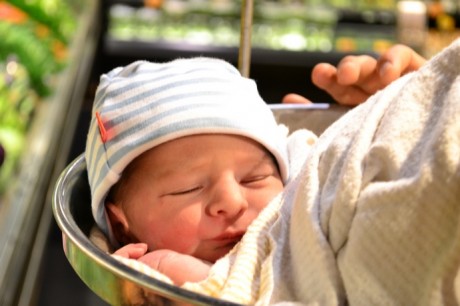
…The next morning we took Jackson to Earth Fare and put him in the produce scale to weigh him. We had taken Jasmine to the automatic scale at the post office so this seemed appropriate. With diaper, onsie, blanket and hat he weighed 7lbs and was 20 inches long. The whole family is doing great and I’m so happy to share this story. ~Jess


Home Birth, story, quote, and a movie…

My friend Becky had an eight pound boy at home last night. She asked me to be available to help with her three older children if she gave birth during the day. But since she gave birth at 2 am, I was not able to attend. While I would have loved to be around just to feel the energy and spirit of a homebirth, it felt right that this most sacred and gentle of moments take place quietly, without too many extra people hanging around. And so this morning as she proudly shared pictures of Her son on Facebook, I felt joy and peace that another blessed child had made it safely to the earth into his parents hands.

Jenny Hatch

Midwife Gloria Lemay:

“[Imagine] if you sent your kids to the local swimming pool on ten different days in the summer. If your child was given complete CPR, oxygen, and a drug injection on nine out of the ten days he went there because the Lifeguard “thought” he was drowning, and he wasn’t, you’d get pretty upset. The fact that normal, healthy young women walk into the hospital to have a baby, and 90% of them came out looking like they’ve had major trauma, is ridiculous.” Gloria Lemay

Following is an excerpt from Rape of the Twentieth Century which is no longer in print.
Interview by Leilah McCracken.

Q&A with Gloria Lemay

Gloria Lemay is the only non-registered birth attendant in the province of British Columbia still serving parturient women; all others have been terrorized out of practice by a monopolizing, litigious, government-sanctioned midwifery cartel. Ms. Lemay has been in service for over twenty years, and is currently the most popular midwife in B.C.

Q- Why did you become a midwife?

A- Because having my first homebirth was a life-changing experience for me. Up until that time I had worked in fields primarily involving men; and

when I gave birth to my daughter, I really claimed my womanhood – it changed my direction completely into wanting to work with women.

Q- What does birth mean to you?

A- it’s one of the few opportunities we have in life for transformation. The suck of life is that people can change- that change will happen over time.

We come to believe that because there is a lot of common agreement around it; and transformation is expected to happen in a predictable time-frame. Yet in birth, a transformation happens outside of time – outside of time and space. It’s not something you can repeat or do again; it’s actually a change of substance. I was transformed in my births, and creating room for other people to experience that is really important to me.

Q- Sometimes you call yourself a “private birth attendant”. Why don’t you like to be called “midwife” anymore?

A- Legally managed and sanctioned midwifery tends to become invisible in the system very quickly. Working outside the system is what I do, and I am not attached to calling myself a midwife- it’s a lovely word to my ears, but my definition of the word seems to be quite different from the legislators in my province: to them, “obstetrical nursing” is equatable with “midwifery”.

Q- What qualities make a good midwife?

A- Patience number one. And an ability to be in true service- to put yourself aside and see what is really needed in the other person. Love in the

heart… It helps to be smart. One should be able to stay calm,and be reliable in the face of emergency.

Q- What is the role of modern medicine in childbirth?

A- Mostly, to get the hell out of it. In a small percentage of cases, modern medicine can make a life-saving difference. But the harm that doctors have inflicted on the women of North America for no reason is like a holocaust. A good analogy would be if you sent your kids to the local swimming pool on ten different days in the summer. If your child was given complete CPR, oxygen, and a drug injection on nine out of the ten days he went there because the Lifeguard “thought” he was drowning, and he wasn’t, you’d get pretty upset. The fact that normal, healthy young women walk into the hospital to have a baby, and 90% of them came out looking like they’ve had major trauma, is ridiculous.

Q-Do you feel a backlash happening against the homebirth movement?

A- I actually think that there’s less as we approach the year 2000. We’ve gotten to a point where alternatives- and practices that have endured over time- are becoming increasingly accepted. Did you know that twenty-five percent of people buy organic food? When an idea reaches critical mass, what was the idea of a few people suddenly becomes everybody’s idea. The day is coming quickly when the women who have been persecuted as midwives will be rewarded for

their perseverance with very busy practices.

Q- What is your single greatest fear regarding childbirth?

A- My natural fear is having a baby death, because of the pain that the parents go through. That fear keeps me smart, prepared, and keeps me working

preventatively, so parents have the best chance possible of having a live baby. I also fear that one of my clients will have a cesarean section- or a

forceps delivery- or any of the other interventions that I hate.

Q- How many women should be getting cesarean sections?

A- No more than three percent.

Q- Why aren’t you a registered midwife?

A- I believe in joining and giving my membership to organizations whose actions reflect my own beliefs regarding their actions and stated

philosophies. The British Columbia College of Midwives is not an organization to which I’d give my name or my money. They see new midwives as a threat to their monopoly of the homebirth market– I was not welcomed or supported as a new midwife, to say the least.

Q- Is there anything positive in the medical model of birth?

A- There are a lot of positive things about it, and if midwives are smart, they’d take all the positives, duplicate them, and compete strongly on the things that are not positive. Taking things like clean fingernails, reliability (there’s always someone there when women show up at the birth captivity center), making sure there’s enough oxygen in the oxygen tank, always having lots of sterile gauze- there are certain things that are useful, and conscious, that doctors and nurses do that midwives can, and should, duplicate. On the other hand, we can compete very strongly with doctors and nurses because midwives can do all those things easily, plus offer preventative measures, womanly wisdom, and our own experience in giving birth. We can also offer

a lot of tricks of the trade that doctors don’t know about- plus a gentler approach.

Q- What is the role of men in childbirth?

A- To protect the women.

Q-What is your most important job as a birth attendant?

A- To create a safe environment for the mother and baby.

Q- What bothers you most about TV’s portrayal of childbirth?

A- In order to sell commercial space, whatever’s being presented has to have a dramatic element. Birth in real life is not dramatic- it is sacred, moving, alive and earthy- but it’s not something that would make a dramatic screenplay. Birth has to be warped a bit to make it saleable to commercial interests. Unfortunately, people get their general perceptions of birth, police work and legal matters- and their perceptions of those who work within these professions- through what they see on TV. Midwives, police officers and lawyers will tell you that the every day work of their businesses is nothing at all like what is seen on TV- but people never believe it.

Q- What questions do you hear most from families, and how do you respond to them?

A- Mostly- “How can we avoid being involved with the medical system in any way?” They want to avoid transfer to the hospital, having a doppler used to detect fetal heart tones ultrasonically, diabetes screenings…

Most people who come to see me are referred by friends- so they’ve already heard all about me. They already know that I’m out of the system. In the course of prenatal visits, we get to know each other, trust each other and understand each other’s vulnerabilities. This all pays dividends at the birth because everyone has only one focus- the highest good of mother and baby.

Q- What should midwives do in society to help heal birth?

A- What I concentrate on is one birth at a time, with excellence in my practice. One woman tells another, and soon a hundred people have heard the birth story. Each birth creates a ripple effect in the community- it’s amazing the effect that a normal birth has on people.

Q- What roles should midwives have- aside from attending birth- in the community?

A- Classically, midwives have been the wise women who looked out for their communities: they were the women to whom you would go to get help with burying your grandparents; the women who would come with hot meals for the family when the husbands have been ill; they were mature women who never gossiped or betrayed confidences. They furthered wise action and harmony in their communities, and in turn, their communities took care of and honored

the midwives. A midwife’s role should be to promote harmony.

Q- How would a woman go about becoming a midwife?

A- The way I did it twenty years ago was best for me. For four years I immersed myself in reading, eating and breathing birth. We formed different

midwifery study groups, and I began teaching prenatal classes. I did a lot of hospital labor support, and was helped by friends who were doctors and nurse-midwives. I learned a lot from them. I also learned a lot about what NOT to do at a birth… Some of these births were such gruesome rapes I shudder to think of them now. I know there are obstetricians who hate women and are just plain evil in their disregard. I really wanted to keep women away from medicine as much as I could- so I learned how do things like injections and suturing myself. Also, a midwife needs to know many things to be good at her job. She should learn all she can about all aspects of life- she needs to know about religion, government, history, economics, auto mechanics,

linguistics, geography, psychology, matters of the law, physiology, crisis management- she will have to have a wide repertoire of knowledge regarding all aspects of women’s lives.

Q- Could you briefly describe your legal battles?

A- In 1985 my partner and I attended a homebirth in Vancouver where a baby died. We were charged with criminal negligence causing death to the baby, criminal negligence causing bodily harm to the mother, and four counts of practicing medicine without a license. What ensued was a six-year odyssey of appearing before the courts in British Columbia and Ontario- ultimately culminating in an appearance before the Supreme Court of Canada. We were finally acquitted of all charges in 1991. At that time I returned to my midwifery practice (I wasn’t practising at all between 1985-91). In 1994 I had a baby in my practice who died at three days old; and there was a seven day Coroner’s Inquest into his death- which resulted in a finding of “accidental death”. There was a lot of negative publicity and again, once it blew over, I returned to my practice.

Q- What positive result came from your Supreme Court case?

A- Our goal was for it to be the last time midwives faced the criminal justice system in Canada, and for our trial to be the end of all midwifery trials in

Canada. There has not been a criminal arrest of a midwife since.

Q- What is the climate for you inside hospitals when you need to take women in?

A- It varies- sometimes extremely hostile, sometimes extremely cooperative- it seems to depend on the mood of the hospital staff. I’ve learned not to take it personally.

Q- Do doctors really believe they do right by women by interfering with childbirth?

A- I think they’re resigned to birth as it appears to them inside the confines of a hospital. They get resigned to what they see every day, and believe that what they see is how birth is supposed to be. I really feel that doctors don’t have a clue about what to do or how to help birthing women- then they blame women for “needing” interventions. They blame the women for the terrible statistics. They’ve been taught how to do things- and have never questioned the wisdom of what they’ve been taught.

Q- Why do midwives in hospitals remain silent regarding alarming intervention rates?

A- I think they’re resigned to playing politics.

Q- Do some women- such as non-English speaking or minority- suffer more in hospital births than others?

A- I think that in Canadian hospitals some women are used as teaching patients more than others, so interns can learn procedures. These women often have no idea what’s going on, either to them or around them. They also have an unrealistic idea that modern technology is always better than the simpler, more natural ways in their own countries. I think it would make a difference to these women if there were labor support people of their own language or descent in hospitals to help them. Young and uneducated women are taken advantage of too. Two Burnaby midwives were running a program for teaching teenage mothers about nutrition in pregnancy; they soon got a huge number of young women coming to them for counseling. They would channel these young mothers for their regular prenatal care to doctors who never did episiotomies- that is, to gentle women doctors. Soon, other doctors could feel the pinch in their practices- and were forced to develop kinder approaches as well. Hit them where it counts to make change- in the wallet.

Q- What are the most important things a pregnant woman can do to ensure the health of her baby?

A- Eat a good diet. Muster all the social support she can around her. There have been studies that have shown that these are the only two things really make a difference.

Q- What are the two greatest advantages of homebirth?

A- No one will lose your baby, and so far no one has had a cesarean section at home.

Q- Can you think of any disadvantages?

A- Your midwife has to wash the sheets- there’s no paid cleanup staff.

Q- Do breathing exercises really help in preparation for childbirth?

A- Breathing exercises worked for me personally. I love to have some familiar tools when going into scary or unknown situations- learning how to

breathe was valuable for me going into my own births. Some women don’t care about them, though. Every woman has unique wants and needs, and midwives should listen, and put their own judgments aside. If women say they would like to be taught breathing exercises, then they should be taught. That goes for anything else as well. Midwives need to address women as individuals- they need to address individual needs.

Q- What do you find most rewarding about being a midwife?

A- Feeling like I make a difference- knowing that I make a difference.

Q- If you could tell all the obstetricians in the world one thing, what would it be?

A- That birth needs to be undisturbed.

Q- What would you like written on your gravestone?

A- “Gloria Lemay- MIDWIFE & MOTHER… She spoke up for babies”.

First published in 1999.