Davis Bitton, who died in 2007, was a regular columnist on Meridian. He was president of the Mormon History Association, professor of history at the University of Utah, and official Assistant Church Historian in the Church of Jesus Christ of Latter-day Saints. This article, somewhat shortened from what we published years ago, is a classic, a statement from a scholar who had looked deeply into Church history and, like so many others, cannot find anything that forces the conclusion “our enemies like to promote.”
I don’t have a testimony of the history of the church. That is why I can be a historian and also a believing Latter-day Saint. I will expand on this idea, but first let me address some related questions.
Do all well-informed historians become anti-Mormons?
The critics would have you believe that they are disinterested pursuers of the truth. There they were, minding their own business, going about their conscientious study of church history and—shock and dismay!—they came across this (whatever this is) that blew them away. As hurtful as it is for them, they can no longer believe in the church and, out of love for you, they now want to help you see the light of day.
Let’s get one thing clear. There is nothing in church history that leads inevitably to the conclusion that the church is false. There is nothing that requires the conclusion that Joseph Smith was a fraud. How can I say this with such confidence? For the simple reason that the Latter-day Saint historians who know the most about our church history have been and are faithful, committed members of the church. More precisely, there are faithful Latter-day Saint historians who know as much about this subject as any anti-Mormon or anyone who writes on the subject from an outside perspective. In fact, with few exceptions, they know much, much more. They have not been blown away. They have not gnashed their teeth and abandoned their faith. To repeat, they have found nothing that forces the extreme conclusion our enemies like to promote.
We need to reject the simpleminded, inaccurate picture that divides people into two classes. On the one hand, according to our enemies, are the sincere seekers of truth, full of goodness and charity. On the other hand, in the critics’ view, stand the ignorant Mormons. Even faithful Mormon scholars must be ignorant. Otherwise they are dishonest, playing their part in the conspiracy to deceive their people. This is the anti-Mormon view of the situation.
Can we see how ridiculous this picture is? It is a travesty on both sides. Many Latter-day Saints may not know their history in depth, but some of them know a good deal. As for Latter-day Saint scholars, as a group they compare favorably with any similar group of historians. It will not do to charge them with being dishonest. I happen to know most of them and have no hesitation in rejecting a smear of their character.
On the other hand, your typical anti-Mormon is no disinterested pursuer of the truth. If you are confronted with a “problem,” some kind of “non-faith-promoting” take on church history, the chances are that your willing helper can lay no claim to having done any significant research in Mormon history. Oblivious to the primary sources, unread in the journal literature, the critic has picked up the nugget from previous anti-Mormon writers and offers it as though it were a fresh discovery. Most of the time it is anything but new—it is a stock item in a litany of anti-Mormon claims that serves their purpose. It is a broken record.
Why does the charge accomplish anything? Because they don’t tell you how stale it is and of course will not let you know where to find the answers that have already been provided. To you the charge is new, or may be new. Falling into the trap, you think you have been deceived by the church—after all, here is something that appears to be seriously damaging to the restored gospel. Like peddlers of snake oil from time immemorial, the critic is willing to take full advantage of the situation.
How many historians who are deeply familiar with the sources on Mormon origins still find it possible to remain in the fold? We might start with names like Richard L. Bushman, James B. Allen, Glen M. Leonard, Richard Lloyd Anderson, Larry C. Porter, Milton V. Backman, Dean C. Jessee, and Ronald W. Walker, all of whom are thoroughly familiar with the issues and sources. Joining their ranks are younger historians like Steven Harper and Mark Ashurst-McGee. I offer just a sampling of faithful, knowledgeable historians.
I do not claim that all who study Mormon history are believing Latter-day Saints. That would be patently absurd. From the beginning, disbelieving historians have written accounts of the events. There have also been historians like Hubert Howe Bancroft who simply put the truth question on the shelf. No one denies that such approaches are possible. But there is also a long tradition of important work by Latter-day Saint scholars. In other words, those who know the most about Mormon history do not simply and inevitably join the ranks of disbelievers and Mormon-haters. It is quite possible, apparently, to know a great deal about Mormon history and still be a practicing, believing Latter-day Saint.
Why do I spend time insisting on this simple, obvious fact? Because our opponents want to leave the opposite impression. And because for many Latter-day Saints it is sufficient to know that faithful historians who are thoroughly familiar with the issues do not accept the interpretations and conclusions of the would-be destroyers of faith. I have not entered the argument over any of the specific issues. My point is simpler than that: Competent historians who have devoted many years of study to the issues have not felt compelled to abandon their faith in the restored gospel.
Are our expectations realistic?
May I reminisce just a little? The year was 1979. Leonard Arrington and I had just published a one-volume history of the church entitled The Mormon Experience: A History of the Latter-day Saints…
During that euphoric time, Leonard and I attended autograph parties, were interviewed, and gave quite a few talks. In an interview for Sunstone, we were asked to describe the relationship between faith and history. Here is Leonard Arrington’s response:
I have never felt any conflict between maintaining my faith and writing historical truth. If one sticks to historical truth that shouldn’t damage his faith in any way. The Lord doesn’t require us to believe anything that’s untrue. My long interest in Mormon history (I’ve been working in it for 33 years) has only served to build my testimony of the gospel and I find the same thing happening to other Latter-day Saint historians as well.
My own answer went like this:
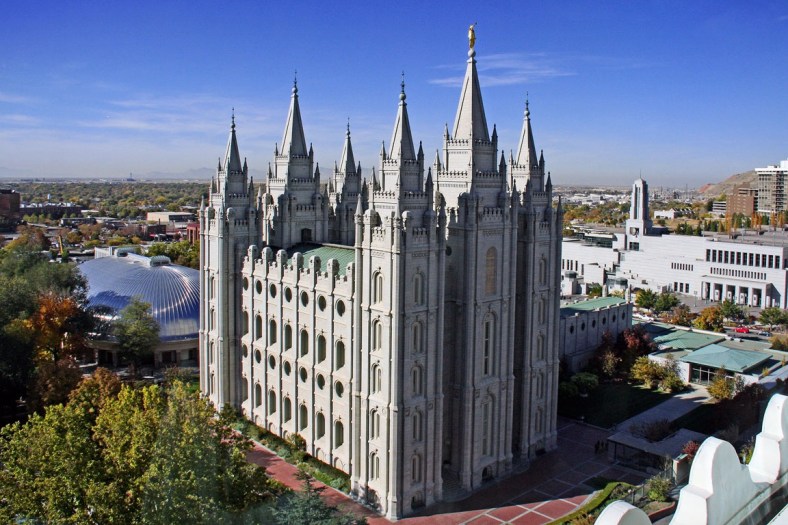
What’s potentially damaging or challenging to faith depends entirely, I think, on one’s expectations, and not necessarily history. Any kind of experience can be shattering to faith if the expectation is such that one is not prepared for the experience. . . . A person can be converted to the Church in a distant part of the globe and have great pictures of Salt Lake City, the temple looming large in the center of the city….
…Only in the Doctrine and Covenants course is some historical background sometimes included, and even there the emphasis is on the spiritual and doctrinal content. Finally, at present (and for the past few years), priesthood and Relief Society classes devote a year of study to one of the presidents of the church. Some historical background is provided, but once again the emphasis is on the doctrinal teachings. The message that comes across to me loud and clear from lesson manuals and missionary lessons is simple. Our testimony is not in the history of the church.
So our eager anti-Mormon comes to us with his version of Mormon history. He has probably picked up his example from other anti-Mormons. He is pretty sure his Latter-day Saint neighbor will not know about it. His eyes are bright with anticipation. “Gotcha! What do you say to that! In view of that, how can you possibly be a Mormon.” If he doesn’t say these things, he implies them.
Here is where the faithful Latter-day Saint should take the wind out of the sails of the critic. Instead of collapsing with a wail of distress, the church member smiles and shrugs his or her shoulders and says things like this: “Hmm. I wonder if that’s true.” “That isn’t part of my religion. I have never heard it taught in any of the classes and have not read it in any of our manuals.” “You know what? That probably interests you a lot more than it does me.” “I haven’t heard what might be said on the other side. But what I do know is that I don’t have a testimony of the history of the church.”
Some of us might deplore the fading of church history from the curriculum. In the meantime, of course, you can still read on your own, individually or in study groups. To my knowledge, no one is forbidding such study.
Admittedly, knowledge of church history is not essential to our eternal salvation. But I do think it is natural and very satisfying to learn as much as we can about it. We study history, any history, as part of our human quest for self-understanding. As I read about the Latter-day Saints and their activities in the past as well as the present, I can be inspired, amused, bewildered, surprised, proud—and sometimes a little ashamed. More often than not, I am amazed at the perseverance, the tenacity, the determination to stay the course through good times and bad. Without even trying, I instinctively identify with the Saints. Imperfect as they were and are, the Latter-day Saints are my people. But my testimony is not in them, and I hope theirs is not in me.
Brigham Young once made a statement about Joseph Smith that our enemies smack their lips over. How they love to misuse it! Here is what Brother Brigham said:
I recollect a conversation I had with a priest who was an old friend of ours, before I was personally acquainted with the Prophet Joseph. I clipped every argument he advanced, until at last he came out and began to rail against “Joe Smith,” saying, “that he was a mean man, a liar, moneydigger, gambler, and a whore-master”; and he charged him with everything bad, that he could find language to utter. I said, hold on, brother Gillmore, here is the doctrine, here is the Bible, the Book of Mormon, and the revelations that have come through Joseph Smith the Prophet. I have never seen him, and do not know his private character. The doctrine he teaches is all I know about the matter, bring anything against that if you can. As to anything else I do not care. If he acts like a devil, he has brought forth a doctrine that will save us, if we will abide it. He may get drunk every day of his life, sleep with his neighbor’s wife every night, run horses and gamble, I do not care anything about that, for I never embrace any man in my faith. But the doctrine he has produced will save you and me, and the whole world; and if you can find fault with that, find it.11
What do you think Brother Brigham meant? Was he giving carte blanche to church members, saying that it didn’t matter how they behaved? Was he here giving his true feelings about Joseph Smith and actually describing him? If President Young’s meaning isn’t obvious, let me paraphrase it: The truth of the gospel and the divinity of Joseph Smith’s calling as prophet of the restoration do not depend on his behavior as a human being and do not require perfection in his life.
Did Brigham really think that Joseph was a moral reprobate? That is the way some brilliant anti-Mormons use this quotation. Ridiculous. Listen to this: “Who can justly say aught against Joseph Smith? I was as well acquainted with him, as any man. I do not believe that his father and mother knew him any better than I did. I do not think that a man lives on the earth that knew him any better than I did; and I am bold to say that, Jesus Christ excepted, no better man ever lived or does live upon this earth. I am his witness.”12 But—and this is an important truth—President Young did not want his testimony to center on Joseph Smith as a person.
Let’s consider a statement by President George Q. Cannon: “Do not, brethren, put your trust in man though he be a Bishop, an Apostle, or a President; if you do, they will fail you at some time or place; they will do wrong or seem to, and your support be gone; but if we lean on God, He never will fail us. When men and women depend on God alone and trust in Him alone, their faith will not be shaken if the highest in the Church should step aside. . . . Perhaps it is His own design that faults and weaknesses should appear in high places in order that His Saints may learn to trust in Him and not in any man or men.”13
I do not have a testimony of church history. In this declaration, I join Nephi, who said: “O Lord, I have trusted in thee, and I will trust in thee forever. I will not put my trust in the arm of flesh; for I know that cursed is he that putteth his trust in the arm of flesh” (2 Nephi 4:34).
Paper presented at the annual meeting of the Foundation for Apologetic Information and Research (FAIR), Sandy, Utah, 5 August 2004 (see http://www.fair-lds.org). Used by permission. Also published in Meridian Magazine Online (see http://www.ldsmag.com). Used by permission. Copyright 2004 Davis Bitton.
“An Interview with Leonard Arrington and Davis Bitton,” Sunstone, July-August 1979, 41.
“Think Not When You Gather to Zion,” Hymns (1948), no. 21.
See Isaiah Berlin, The Crooked Timber of Humanity: Chapters in the History of Ideas (London: Murray, 1990).
Leopold von Ranke, The History of the Popes, Their Church and State and Especially of Their Conflicts with Protestantism in the Sixteenth and Seventeenth Centuries, trans.

 I am a mother to three sons, but Michelle has been raising five boys and has been writing a series of essays on Raising Real Men. Her most recent blog post describing the intellectual climate in her home was such a great read I just had to share it.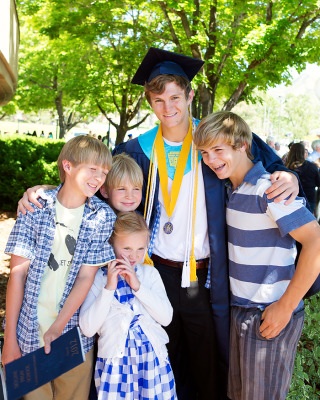






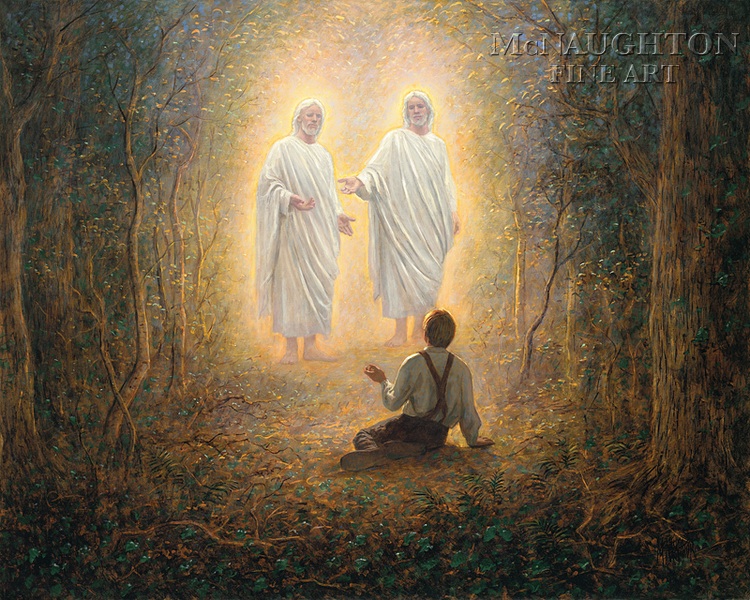
 Kimberly, one of my favorite writers at Feminist Mormon Housewives, waxed truly eloquent recently on the topic of the Mormon Faith Crisis, which was the focus of a New York Times religion piece last week.

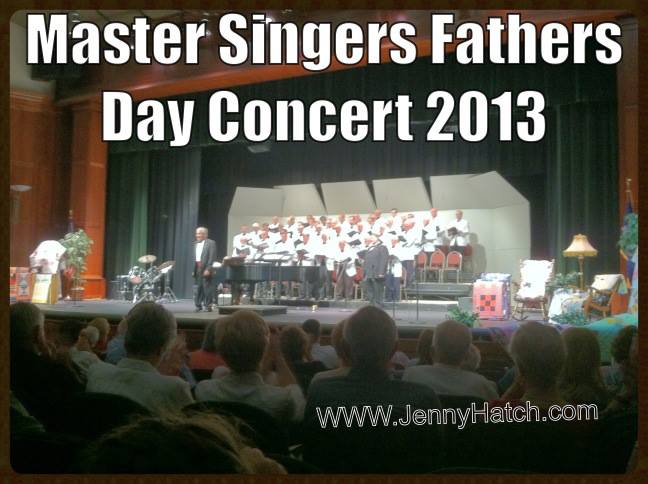 Paul sings with a wonderful group of Men called The Master Singers. They held a series of concerts over the weekend, with the final Fathers Day performance at The Heritage Center in Cedar City Utah last night. It was such an amazing event. I was pleased that Paul was asked to give the opening prayer.

