How Vested Interests Created the Perfect Marketing/Lobbying Machine: Mental Health “Advocacy” Groups—Funded by Pharma
by CCHR International
An ongoing U.S. Senate investigation headed by Senator Charles Grassley has sought disclosure of pharmaceutical funding paid to researchers, physicians, medical schools and medical journals. Some of the nation’s most prominent psychiatrists have now been exposed for extensive conflicts of interest amounting to millions in undisclosed pharmaceutical funding, including Dr. Charles Nemeroff, Dr. Joseph Biederman, Dr. Melissa DelBello, Dr. Timothy Wilens, Dr. Thomas Spencer, Dr. Alan Schatzberg, Dr. Martin Keller, Dr. A. John Rush, Dr. Karen Wagner, Dr. Jeffrey Bostic and Dr. Frederick Goodwin — many of which serve as advisory board members to mental illness “advocacy groups” which are now also the subject of the Senate investigation for their undisclosed pharmaceutical funding.
The majority of the public may or may not be familiar with these so-called mental health advocacy organizations, such as the National Alliance on Mental Illness (NAMI), Children and Adults with Attention Deficit Hyperactivity Disorder (CHADD) or the myriad of bipolar, depression or ADHD “support groups” that are inundating the internet.
But they need to be.
These are groups operating under the guise of advocates for the “mentally ill,” which in reality are heavily funded pharmaceutical front groups – lobbying and working on state and federal laws which effect the entire nation — from our elderly in nursing homes to our military, pregnant women, nursing mothers and school children. Presenting themselves as patient advocacy groups is highly disingenuous not only to their membership, many of which may have a sincere desire to help a loved one or a family member with mental problems, but to legislators, the press and the American public — for they have consistently lobbied for legislation that benefits the mental health and pharmaceutical industries which fund them, and not patients they claim to represent.
Certainly any organization claiming to be for the rights of patients diagnosed mentally ill would have as their primary goal, full informed consent in the field of mental health – including full and complete disclosure of all drug risks, the right to refuse treatment, the right to know that psychiatric diagnoses are not medical conditions (evident by the fact there is not one confirmatory medical/scientific test). Above all such groups would provide patients with an abundance of information on non-harmful, non- drug, medical solutions and options considering the dangerous and well documented risks of psychiatric drugs by international drug regulatory agencies.
These groups do not.
A patients rights group for the mentally ill would never endorse something as absurd and obviously dangerous as giving electroshock to pregnant women, nor condone schools being able to require children to take a psychiatric drug as a condition of attending school. Furthermore, they would never be opposed to the FDA actually doing its job and finally issuing long overdue warnings that antidepressants can cause children to commit suicide, or issue warnings that ADHD drugs have serious and even deadly side effects. Yet these are just some of the actions condoned and promoted by these so-called patients rights groups.
As another example take the federally proposed bill, The Mothers Act; a previous version of this bill called on using a method of “screening” pregnant women and new mothers called EPDS, a screening method documented to triple the number of women diagnosed with Postpartum depression, according to a study published in Obstetrics & Gynecology. The Scandinavian Journal of Public Health stated that EPDS screening was unethical and should not be used. None of the so called advocacy groups for the mentally ill had any objections to this bill whatsoever, or endorsing such an unethical screening tool. They supported it. The bill would have passed with no objections from them whatsoever, if not for the dedication of real advocacy groups with no vested interests (ties to Pharma) opposing language in this bill that would have led to women being falsely diagnosed and put on dangerous psychiatric drugs to “treat” them, unnecessarily placing new mothers and their infants at great risk.
To put it simply, these groups are not what they appear to be. Yet their influence over legislation, lobbying, drug regulation (or lack thereof), and public relations campaigns is substantial and effects the entire nation. For they claim to be the voice of the “mentally ill.” But are they? Or are they the result of a brilliant marketing/lobbying campaign designed to benefit the industry that funds them—the Psycho/Pharmaceutical industry.
To find out how it all started click here: http://www.cchrint.org/2009/12/10/3472/
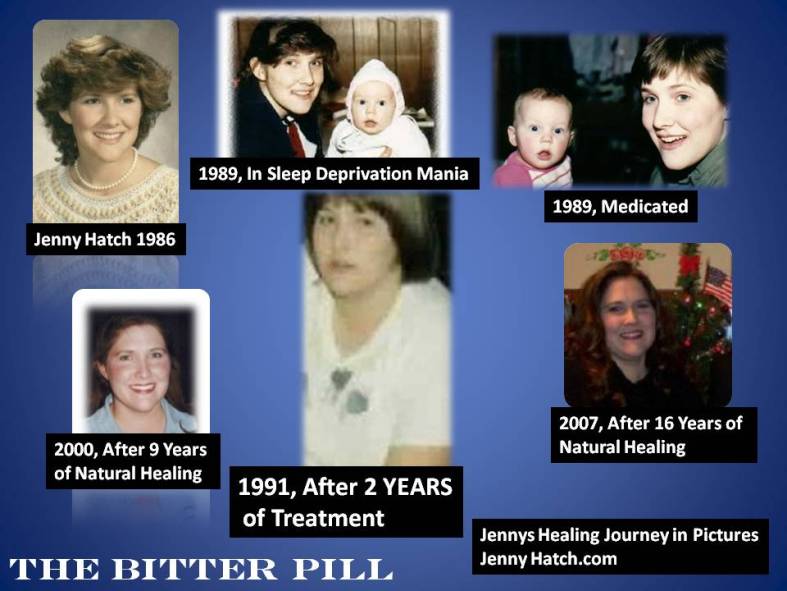
The only thing I would add to this article is the fact that there is a literal army of Big Pharma Whores on the internet posting in chat rooms, writing blogs, and leaving comments on anti drug websites who are paid by Pharma Companies to be “disrupters” to the debates raging around mental health issues. I have participated in chat rooms since 1996 and during these almost fourteen years of internet debate, I can only testify that the number of paid commenters, bloggers, and chat room drug whores has increased exponentially each year. Please be aware of this when you get “shouted” down by someone in a chat room after posting something anti drug, anti psychiatry, and pro natural remedy. I usually just ask them how much Merck paid for them to be on the board to debate me.
Jenny Hatch
Healthy Families Make A Healthy World!
 East County Magazine Reports: